50 Book Journaling Prompts That Make Reading Stick
A bookmark-worthy list of 50 prompts for your reading journal – per-session, per-chapter, post-finish, monthly. Use what you need, ignore the rest.
 Lucas Bewersdorff
Related reading
Why Do I Read? My 6 Reasons for Reading Books
Why do I read? To learn things. Under that answer: one idea to apply, my work, talks with my partner, the people who hand me books, and a sustainable habit.
Why Scary Books Beat Scary Movies
Scary books are often scarier than movies because a book never has to show you the monster. Why it works, two book-vs-film proofs, and where films still win.
How to Build a Reading Habit With Friends
Build a reading habit with friends using one of four mechanics: a buddy read, parallel streaks, a weekly check-in, or a shared TBR. Also: which apps help.
50 Prompts. I Use 3.
That's how I would like you to look at this list. A long prompt list is a buffet. The job of this article is to put the full menu in front of you so you can find the handful of prompts that actually fit your reading life, and ignore the other forty-some without guilt. Most readers I know who try journaling fail at the same step: they treat a prompt list like a checklist, get overwhelmed by the third book, and quit. Pick a small set you'll actually reuse. Let the rest go.
If you're still deciding whether to keep a reading journal at all, take a look at this article first: Should you start a reading journal. This article assumes you're past that. Below: 50 prompts in five categories, with honest notes on which ones I actually use and which I never touch. Bookmark it if it helps, come back when the next book closes.
Per-Session Prompts (Mid-Read or Right After)
Honest disclaimer: my sessions tend to end without a prompt stop. I close the iPad mini, and the next prompt I'll meet is the post-finish one when I close the book for good. But these are the lowest-friction prompts on the list, and for readers who want a 30-second checkpoint after each session, they're the cleanest starting point for journaling. Each can be answered in one or two sentences.
- What surprised you in today's pages?
- A sentence worth quoting to a friend.
- A question you want to follow up on after the book is done.
- Did you want to keep reading, or was it a stretch to keep going?
- What's the author trying to convince you of (and did it work)?
- A word, phrase, or concept you'd never heard before.
- What you'd push back on if you were in the room with the author.
- A character or example you're rooting for (or against).
- What did this session change in your head, if anything?
- A sentence you'd want past-you to have read five years ago.
Per-Chapter Prompts (For When You Want to Synthesize)
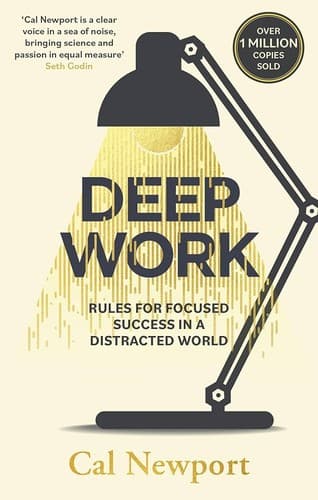
Same caveat: I don't do these consistently either. Chapter-stop journaling fights momentum for me, and momentum is most of how I finish books at my reading speed. But for slow, dense nonfiction – Deep Work took me 15 sessions and would have landed even harder with prompts like these – they're the move that turns a chapter into an idea you'll still have a week later. Treat them as optional and powerful: skip them for light books, pull them out for the books you really want to use.
- Summarize the chapter's argument in one sentence (without flipping back).
- The chapter's strongest example.
- The chapter's weakest claim (the one you'd fight in a book club).
- What would change in your behavior if you actually took the chapter seriously?
- Who in your life would benefit most from this chapter? (Are you going to send it to them, or just think about sending it?)
- How does the chapter connect to something you already believe?
- How does it contradict something you already believe?
- One sentence you'd lift out and put on a sticky note.
- Predict what's coming next and write the prediction down. The act of staking it is what matters.
- A counter-example from your own life.
Post-Finish Prompts (Within 24 Hours of Closing the Book)
This is the section I actually live in, and it's the one I'd push hardest if you're picking three prompts from the whole list. The 24-hour window is where the book either becomes something you can use or simply evaporates. These prompts are what tip the result toward the first outcome. For the science underneath, see: How to actually absorb what you read. The short version is that summarizing within a day is what locks it in. My own working set of three prompts lives almost entirely in this category.
- What's the book actually about? One sentence, your words, no peeking at the blurb.
- The one idea you want to remember in five years.
- What you'd say if a friend asked, "should I read this?"
- Who is this book NOT for?
- How does this book change a decision you have to make in the next month?
- Three quotes that earned a highlight (and one line on why each).
- The author's strongest argument.
- The author's weakest argument.
- A book this one is in dialogue with (agreement or disagreement).
- A scene or example you'll remember after the rest fades.
- What you wanted the book to do that it didn't.
- What it did that you didn't expect.
- Star rating with a one-line why (the why matters more than the stars).
- A book this one is making you want to read next.
- Would you re-read it, and when?
Monthly Reflection Prompts (For Recap-Builders)
These are the prompts that feed my May 2026 reading recap. Without them, a recap is just a stat dump (fine for the dashboard, but pretty useless to reread later). The monthly set is also where pattern recognition lives: after a few months of answering these, you start to see your own taste in print, like which genres you keep going back to, which months felt good, and which books you talked yourself into and shouldn't have. These patterns are invisible without the record.
- What did you actually finish this month?
- Favorite read of the month (and the specific reason it landed).
- Biggest disappointment, and why.
- What genre dominated this month, and was that on purpose?
- Did you re-read anything? (And was it worth it?)
- The longest book on the list. Was it worth the time?
- Which book changed something (a habit, a belief, a plan)?
- Which book are you most likely to forget by next year? (Worth revisiting before you do?)
- What's missing? What would you have wanted to read more of?
- What are you carrying into next month?
Quote-Curation Prompts (For the Commonplace Book)
The smallest set, and the one I think pays off most over time. A commonplace book – your own running collection of the best quotes from every book you read – is the kind of artifact that pays off in years. Use these prompts a few times a month to curate what you've captured: the act of choosing what survives is what makes the collection useful instead of just long. The Almanack card below is a published version of what your own commonplace book can turn into.
- Of every quote you've captured this month, which three would you tattoo on a notebook cover?
- Are any of your captured quotes saying the same thing as a quote from a different book? (Those are the durable ideas, the ones that show up across authors.)
- Which quote would change a friend's life if you texted it to them right now? (You should totally text it to them right now!)
- Which quote feels more true now than when you captured it? Which feels less true?
- A quote you'd add to your bio.
The Almanack of Naval Ravikant
by Eric Jorgenson
Modular nonfiction at its best: short sections, dip-in-and-out structure, no need to read it in order. Basically a finished commonplace book in published form, and a useful model for what your own quote-curation can turn into over years.
Est. read: 4h 14 min
Get your reading estimatePick Three. Skip the Other 47.
The whole point of putting 50 prompts in front of you is so you can find your three. Mine are the 24-hour one-sentence summary, the "star rating + why", and the monthly favorite-and-why. That's most of my journaling habit, honestly. Everything else on this list is optional: useful when a specific book asks for it, ignorable when it doesn't.
The journal you'll actually keep is the one that fits where you already are. For me, that's ReadingHabit's session-notes layer. I attach the post-finish prompts to the last session of every finished book, and the note lives right next to the book in my library. The system collects itself. Whatever your version is – a notes app, a paper notebook, or a thread you DM yourself – pick the medium that's already open when the book closes. The medium matters less than the consistency, and a few prompts you actually use matter more than fifty you'll try once.
Capture more than you finish
ReadingHabit lets you attach notes to any session – a journal that builds itself. Join the waitlist for early access.