Set Your Reading Intentions Before Starting
A 30-second ritual before you start any book: why you're reading it, what you want from it, and how you'll know it landed.
 Lucas Bewersdorff
Related reading
I Read Every Morning for 30 Days
I read every morning for 30 days and logged almost every session. The real numbers, the mornings my log missed, what changed, what didn't, and whether it stuck.
Reading Isn't Natural. That's the Point.
Humans evolved to speak, not to read. Reading is a skill your brain builds from borrowed parts – which is why practice changes it, even in adults.
How Many Books Should You Read in a Year?
There's no correct number of books to read in a year. Here's what most people read, why a borrowed goal fails, and how to build one from your own day.
We Start Most Books on Autopilot
I quit Let My People Go Surfing only a couple of pages in and felt nothing about it. No guilt, no unfinished-book shame, no plan to come back. Chouinard's book is well-regarded, and I liked the idea of it (a company built on stubborn principles), which was the reason I opened it in the first place.
What I've thought about since is that the book never had a target to hit. I brought no question with me, so nothing inside it could land as an answer. I read at nothing in particular, and it slid off.
A book reaches you through an algorithm, a podcast, a friend who mentioned it – and you start it on autopilot, with no idea what you want from it. Then you drift, and you either quit like I did or finish and think back on it as "that was fine". Thirty seconds before reading the first page, deciding what you're there for, can fix that.
An Intention Isn't a Goal
A goal is a number. Mine for 2026 was 18 books (built from my real reading speed and the two windows I read in). I passed 18 books in July. A goal like that is a scoreboard. It says nothing about what any single book is for.
An intention is more like the flip side: one book, one reason. "I'm reading this to work out how to have a conversation I've been avoiding". That's a direction you check against.
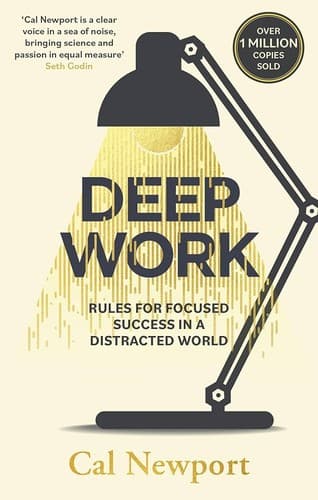
The number never chose a book for me. I read some short books this year, and the assumption is always that the count is talking (it wasn't; I wanted to read them). And I read Deep Work at a pace of 0.4 pages per minute, my slowest tracked book by a margin. I read it slowly because I wanted what was in it more than I wanted the tally.
So the two aren't rivals. The goal keeps you reading, and the intention decides what you read. When they disagree, the intention wins.
The 30-Second Ritual: Two Questions
Two questions, answered in your head, before you turn the first page (or before you pick a stalled book back up). No need for a notebook.
1. Why this book, right now? The first half separates the books you want from the books you feel you should read. "It was on my list" isn't an answer, and neither is "everyone's talking about it". The second half goes a little deeper. A book can be right for you, but wrong for this month – wrong mood, wrong season, wrong bandwidth. Naming the "now" also catches the opposite case: the book that's been sitting there for two years and suddenly has a reason to move. (If your answer mostly reveals that you have no idea what you want next, start with How to Choose Your Next Book instead.)
2. What do I want to walk away with? One idea, one skill, one decision, one good evening. A single sentence is enough. This is what you'll check against when you close the book.
If you can't answer either one, put the book back. Stopping costs you nothing at page zero, and it saves you from finding out the slow way that it's not the one. My quitting Let My People Go Surfing was exactly this outcome, reached by accident and a couple of days late. Doing it on purpose is just quitting without the guilt, before you've invested enough to feel guilty about.
Give every book in your stack a reason
The free TBR Stack Planner lets you reorder your to-read pile and see an estimated finish date for every book in it.
Plan your TBR stackWhat a Good Intention Sounds Like
"I want to know whether my attention is still fixable." That was Deep Work. I can still pull up Newport's four rules from memory two years later, because I read it for something. The intention is also what let me read it that slowly without feeling behind. I was doing the thing I came to do.
"I want to stop trying to become something." That was Tiny Experiments. I came to it wanting a plan for who I'd be at the end of it, and it gave me the opposite: running a small experiment instead of committing to an identity. This blog is one of those experiments.
"I want a good time." A complete intention. Not every book needs a job, and a read you enjoyed is a read that worked.
Practical, personal, or just pleasant: all of them qualify.
Tiny Experiments
by Anne-Laure Le Cunff
Replace five-year plans with small, time-boxed experiments you actually run. A decent antidote to the pressure of having to become something specific.
Est. read: 5h 19 min
Get your reading estimateA shelf where every book has a reason attached turns it from a pile into a plan. Keep the reason wherever you like – a notes app, a reading log, the back of a receipt – as long as it stays with the book.
Turn your intentions into a real plan
The free Reading Goal Planner takes your reading time and speed and shows how many of your intended books you can realistically finish this year.
Plan your reading goalTake the Gut Check at the End
If you've got ten more seconds when you're done reading, check against your intention: did I get what I came for?
Sometimes the answer is no, and that's useful – it tells you something about what to pick next. Sometimes it's yes, and the book closes cleanly.
And sometimes you get something you never asked for. I read Unreasonable Hospitality in the middle of a run of business books (Never Lose a Customer Again just before, $100M Offers right after), and it was the odd one out – a memoir about fine dining wedged between two books about winning and keeping customers. I came for the customer-experience angle. I got way more than that, because I spent years working in service after school and through my bachelor's, and Guidara kept describing things I had done with my own hands without having words for them. Almost none of what I took from it is about restaurants.
The intention's job is to get you into the book pointed somewhere; the book is allowed to take you somewhere better. What it protects you from is the other ending: three hundred pages of drift and a shrug.
Unreasonable Hospitality
by Will Guidara
How a New York restaurant chased the best-in-the-world spot by obsessing over how people feel. Turns out that's a transferable skill, not a restaurant one.
Est. read: 5h 3 min
Get your reading estimateIf you want to read more about this, How to Actually Absorb What You Read picks up where this one stops – what to do during and after a book so it stays. But start here; it's the easiest first step. Before you open the next one, take the thirty seconds. Two questions. Then turn the page on purpose.
Read on purpose, not on autopilot
ReadingHabit keeps the why with the book – log it as your first note, then track every session that gets you there. Join the waitlist for early access.