How to Build a Reading Habit That Actually Sticks
Most reading goals fail by February. Here's a practical system to read consistently (backed by science and tested by real readers.)
 Lucas Bewersdorff
Related reading
Why Do I Read? My 6 Reasons for Reading Books
Why do I read? To learn things. Under that answer: one idea to apply, my work, talks with my partner, the people who hand me books, and a sustainable habit.
Why Scary Books Beat Scary Movies
Scary books are often scarier than movies because a book never has to show you the monster. Why it works, two book-vs-film proofs, and where films still win.
How to Build a Reading Habit With Friends
Build a reading habit with friends using one of four mechanics: a buddy read, parallel streaks, a weekly check-in, or a shared TBR. Also: which apps help.
Why Most Reading Goals Fail
I loved reading as a kid. I genuinely couldn't get enough of books. Then school happened. Years of forced reading lists (Othello, Death of a Salesman, To Kill a Mockingbird, etc.) paired with book reports that turned every story into an assignment. It wasn't one dramatic moment that killed my reading habit. It was a slow, cumulative grind that made books feel like work. By the time I graduated, I hadn't picked up a book voluntarily in years.
For around five to eight years, I barely read at all. Every January I'd tell myself "this is the year I start reading again" which was only a vague intention that never even turned into opening a book. I'd occasionally buy a physical copy thinking "this time will be different," and it would sit on a shelf collecting dust. Meanwhile, my digital "to be read" list kept growing and growing and the hundreds of saved books on it went from being exciting to overwhelming me. The list that was supposed to inspire me became another source of guilt.
Things eventually changed for me. Not overnight, and not because of some life-changing revelation, but more gradual, messy, and full of false starts. Eventually I did find a system that actually stuck. I even ended up studying the science behind habit formation for my thesis. Here's what actually worked for me, and the research behind why.
The Science Behind Habit Formation
Before blaming yourself for not reading enough, consider this: researcher Gloria Mark found that the average attention span on a screen dropped from about two and a half minutes in 2004 to just 40 seconds in 2023. Also, the average employed person now reads less than 10 minutes a day for pleasure. Your brain is literally being trained by short-form content to avoid the kind of sustained focus that reading requires. It's not a willpower problem, but an environment problem.
The good news is that the same behavioral science that explains why habits break also shows how to rebuild them. Charles Duhigg describes the habit loop: a cue triggers the behavior, the routine is the behavior itself, and the reward reinforces it. Over time, the loop becomes automatic, meaning you don't decide to brush your teeth every morning, you just do it. Reading can work the same way once the loop is in place.
But here's the part most people miss. BJ Fogg's Behavior Model shows that behavior only happens when motivation, ability, and a prompt all come together at the same moment. Willpower-based goals like "I want to read 20 books this year" fall apart because motivation fluctuates. Some days you have it, most days you don't. What actually works is shifting from "I want to read more" to "I am a reader." When reading becomes part of your identity instead of a task on your list, it stops requiring willpower. That's exactly what I found when I finally rebuilt my own reading habit.
A Simple System That Works
My return to reading happened in two phases. First came curiosity. A loved one gifted me The Alchemist by Paulo Coelho, and I actually finished it! The first real book I'd read in years! Then, I borrowed Women by Charles Bukowski from a friend, took Blink by Malcolm Gladwell on vacation, and before I knew it I was tearing through nonfiction, from psychology and self-help to business books. The spark was back, but it wasn't a daily habit yet. I was reading in bursts when something excited me, then going weeks without opening a book.
The second phase is what turned occasional reading into a daily ritual: a simple system. Inspiration got me started, but the system kept me going. Here's what it looks like:
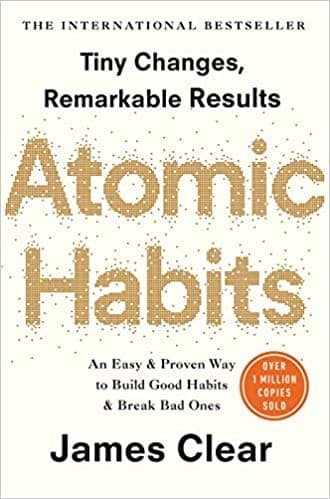
- Start embarrassingly small. I didn't commit to 30 minutes a day or a chapter per reading session. I committed to a few pages. That's it. BJ Fogg calls this "tiny habits": make the commitment so small you can't say no. On your worst, most exhausting day, you can still read two pages. And once the book is open, you'll usually read more.
- Attach it to something you already do. I read in bed, right after waking up before I get out of bed, and at night as the last thing before sleep. The bed is my cue, and my iPad Mini is always on the nightstand within arm's reach. I also read on the couch with some soft music during the day when I have time. The key is pairing reading with an existing routine so it doesn't require a separate decision.
- Track every session. This is the part that made the biggest difference. Once I started tracking my reading – pages, minutes, streaks – occasional reading turned into daily reading. Not wanting to break my streak genuinely motivated me to pick up the book on days I didn't feel like it. Watching my stats grow made progress feel tangible instead of invisible. What gets measured gets managed, but more importantly, what gets measured gets celebrated.
If you're unsure what a realistic yearly reading goal looks like based on your actual schedule and speed, give my Reading Goal Planner a shot. It helps you figure out a number that's ambitious but achievable and not just a fantasy you'll abandon by March.
How many books could you actually read?
Use my free Reading Goal Planner to set a realistic goal based on your schedule and reading speed.
Plan your reading goal3 Mistakes That Kill Reading Habits
Reading books you think you should read, not books you actually want to read.
This is the most common habit-killer, and I've fallen for it more times than I can count. School forced me through books I had zero interest in. Later, I used my free Audible credits to hoard hyped titles – "The Circle", the Elon Musk biography, some Gary Vaynerchuk audiobooks – and never finished most of them. I tried forcing myself through The Autobiography of Malcolm X and Tropic of Cancer and couldn't get past the first few chapters. You know which books actually got me reading again? The Alchemist, gifted by someone who knew me. Gladwell's nonfiction, borrowed from a friend. The Psychology of Money, which I liked so much I re-read it as an ebook. My point being: read what genuinely excites you. If a book isn't working, put it down. Your habit matters more than any single book.
Going too big too fast.
Trying to read for an hour a day when you haven't read in months. Picking a 600-page classic as your comeback book. Letting your to-be-read list grow into a monster of hundreds of titles that paralyzes you instead of inspiring you. All of that was me. What fixed it was being ruthless about curation. Now I only buy ebooks I'm committed to reading, and keep a much smaller "maybe" list separate. Start with a few pages of a book you're genuinely curious about, not a marathon through something that feels like homework.
Not tracking your progress.
Without tracking, reading stays a vague intention. Something you feel like you "should" do more of, with no way to see whether you actually are. Most people also have no idea how fast they read, which makes any goal feel like a guess. Try the free Reading Speed Test to find out your actual pace. It takes under 3 minutes. When you know your numbers, planning becomes realistic instead of wishful thinking.
Find out how fast you actually read
Most people guess wrong. My free Reading Speed Test gives you your words-per-minute (WPM) in under 3 minutes.
Take the free speed testStart Today, Not Monday
Here's the whole system in three lines:
- Commit to just a few pages. Make your goal tiny and impossible to fail.
- Attach reading to something you already do. In bed, with coffee, after work.
- Track every session and let the streak keep you going.
I built ReadingHabit because this is the support system I wished existed when I was staring at a shelf of unread books and a to-be-read list that made me feel guilty instead of excited. It tracks your reading sessions, builds your streak, nudges you when you're about to lose momentum, and shows you exactly how far you've come. You focus on the reading, ReadingHabit handles the accountability.
You don't need to read 52 books a year. You don't need the perfect morning routine. You need a few pages, a consistent cue, and a way to see your progress. Start today. Not Monday. Not next month. Not January. Pick up whatever book is closest to you right now and read a few pages. If that book is not the right fit for you, ask someone who knows you what they'd recommend you to read. Repeat if necessary. That's all it takes to start. You got this!
Turn good intentions into finished books
ReadingHabit tracks your reading, builds your streak, and keeps you consistent. Join the waitlist for early access.