How to Calculate Your Reading Rate
Divide what you read by the time it took. Four reading rate formulas – pages per minute, books per month, pages a day, hours per book – with worked tables.
 Lucas Bewersdorff
Related reading
How Long to Read Every Book in a Bookstore
A Barnes & Noble stocks about 66,000 titles. At half an hour a day, reading them all takes about 1,900 years. The math, and the number that matters more.
How to Make a Reading Schedule
Pages left divided by days left is your daily target. How to make a reading schedule that survives a normal week, with buffer days and a catch-up plan.
How Many Pages Can You Read in an Hour?
Most adults read 40 to 50 pages an hour. Here is the pages-per-hour math, a table by speed band, how book density changes it, and your own real number.
How to Calculate Your Reading Rate
To calculate your reading rate, divide what you read by the time it took. Read 14 pages in 20 minutes and your rate is 0.7 pages per minute or about 175 words per minute (which is my own pace).
The same division answers every reading-planning question:
- Pages per minute = pages read ÷ minutes
- Books per month = books finished ÷ months
- Pages per day = pages left ÷ days left
- Hours to finish = pages ÷ pages per minute ÷ 60
Each formula has a worked table below, so you can check the math against some concrete numbers.
Skip the math
Enter a page count, your reading speed, and your daily minutes. The free Reading Time Calculator shows the total reading hours and how many days the book takes.
Calculate read timePages Per Minute: Measure Your Pace
This is the only rate you have to measure before you can use it. The hours formula further down depends on it. Three steps:
- Read as you normally would for 10 to 30 minutes, in a book you're already reading. Don't pick an easy one, and try not to speed up because the clock is running.
- Count the pages you read. Count a partial page as a fraction (half a page is 0.5).
- Divide the pages by the minutes. For words per minute, multiply the result by 250, the number of words on a standard page.
| The session | The division | Pages per minute | Words per minute |
|---|---|---|---|
| 14 pages in 20 minutes | 14 ÷ 20 | 0.7 | ~175 |
| 19 pages in 20 minutes | 19 ÷ 20 | 0.95 | ~238 |
| 30 pages in 25 minutes | 30 ÷ 25 | 1.2 | ~300 |
The middle row is the adult average of about 238 words per minute.
Treat this single session as one data point, not your pace. Average three or four sessions across different books before you plan with the result. My Reading Speed Test result is 0.7 pages per minute, and so is the average of every session I've ever logged in my ReadingHabit dashboard.
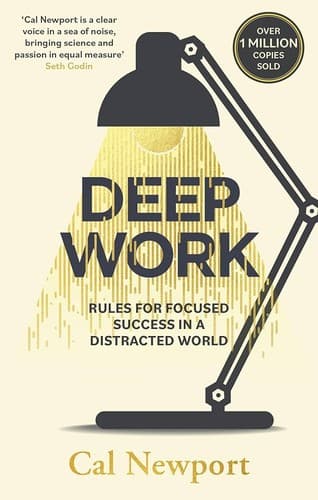
Your pace also changes with the book and the time of day. My slowest book, Deep Work by Cal Newport, ran at 0.4 pages per minute. Between May and September, 10 of the 13 books I read in both morning and in evening sessions were faster in the morning. Estimate with your pace in the book in front of you, not with your best number. The controlled version of this measurement is in How Fast Do You Read.
Measure your pace once
The free Reading Speed Test gives you your words per minute and pages per minute in under three minutes. No signup needed.
Take the free speed testBooks Per Month
Books finished ÷ months = books per month. Turn it around to see if your reading goal matches the time you've got available: target books ÷ books per month = months needed.
| The question | The division | The answer |
|---|---|---|
| 7 books finished in 14 months | 7 ÷ 14 | 0.5 books a month |
| 3 books finished in 2 months | 3 ÷ 2 | 1.5 books a month |
| A 24-book goal for the year | 24 ÷ 12 | 2 books a month |
| 28 books at 2 books a month | 28 ÷ 2 | 14 months |
The first three rows give a rate. The last row uses a rate to find how many months a goal takes.
Books per month is a rough unit. A 180-page novel and an 800-page history both count as finishing one book. The Reading Goal Planner projects your books per month from your pace and daily minutes, and How Many Books Can You Read in a Year gives you the yearly version (whether you need a yearly number at all is a separate question).
Pages a Day to Hit a Deadline
Two directions:
- Pages left ÷ days left = pages a day
- Pages left ÷ pages a day = days needed
| The situation | The division | The answer |
|---|---|---|
| 320-page novel, book club in 12 days | 320 ÷ 12 | 27 pages a day |
| 448-page library loan, due in 3 weeks | 448 ÷ 21 | 22 pages a day |
| 90 pages left at 9 pages a day | 90 ÷ 9 | 10 days |
| 1,307-page book at 20 pages a day | 1,307 ÷ 20 | 66 days |
Make sure to always round up. 320 ÷ 12 is 26.7, but you'll still have to read that fraction of a page.
This formula only gives you a number. To make a plan out of it, choose a target with buffer days in mind (you'll need some slack), and maybe even track minutes instead of pages. In case you do fall behind, here is what to do: How to Make a Reading Schedule.
Hours to Finish a Book
Pages ÷ pages per minute = minutes to finish. Divide by 60 for hours. If you only know your words per minute: pages × 250 ÷ words per minute = minutes (using 250 words on a standard page as an estimate).
One 320-page book at three paces:
| Reader | Pages per minute | The division | Minutes | Hours |
|---|---|---|---|---|
| Fast (~400 WPM) | 1.6 | 320 ÷ 1.6 | 200 | 3h 20m |
| Average (~238 WPM) | 0.95 | 320 ÷ 0.95 | ~337 | ~5h 37m |
| My pace (~175 WPM) | 0.7 | 320 ÷ 0.7 | ~457 | ~7h 37m |
My row is two hours longer than the average for the same book. Keep your estimate honest and true to what you can easily sustain. A slower pace isn't a problem (Am I a Slow Reader explains why).
These are pure reading minutes. Real sessions take longer, because you might get interrupted, lose your place, reread a paragraph, or look something up. How Many Pages Can You Read in an Hour has realistic numbers per hour, and How Long Does It Take to Read a Book spreads the hours across your daily reading time.
Let the Calculator Do the Math
Do each formula by hand once, so the numbers mean something to you. After that, let a tool do them. The Reading Time by Page Count table shows the hours formula applied for 10 to 1,000 pages at slow, average, and fast speeds as reference points.
Put your measured pace into the Reading Time Calculator once, and any book gets an honest time to finish.
Stop doing the math by hand
ReadingHabit measures your pace from every session you log and shows the time left on every book you're reading. Join the waitlist for early access.