Reading Before Bed: Does It Actually Help You Sleep?
Blue light, wind-down routines, and the science behind why a book before bed beats your phone. Plus how to pick the right book for nighttime reading.
 Lucas Bewersdorff
Related reading
Is one page a minute fast? Five bands for what counts as a good reading speed, what is normal, and why the number you already have is almost certainly fine.
What Is the Average Reading Speed?
The average adult reads about 238 words per minute. Here is what that means in pages per hour, why the number varies, and how your own speed compares.
My Reading Recap for August 2026
What I read in August 2026, how long each book took me, which ones were hits or misses, and the streak, hours, pages, and sessions behind the whole month.
The Case for Reading Before Bed
In 2009, researchers at the University of Sussex found that just six minutes of reading reduced stress levels by 68% – more than listening to music, going for a walk, or having a cup of tea. It was the most effective wind-down activity they tested. The Sleep Foundation now recommends reading as one of the best pre-sleep rituals you can build.
But not all reading is created equal when it comes to sleep. The format you use, the genre you pick, and how you set up your environment can either help you drift off peacefully or keep you wired past midnight. I know this because I spent years doing the opposite of what works: cycling between YouTube rabbit holes, Instagram, Reddit, and X until late at night, then wondering why my brain wouldn't shut off when I finally put the phone down.
Replacing that scrolling habit with reading was one of the best decisions I've made for both my sleep and my reading life. Here's what the research says, what actually worked for me, and how to set up a bedtime reading routine that helps rather than hurts.
What the Research Says About Reading and Sleep
The reason reading works so well before bed comes down to something researchers call cognitive distraction. When you're lying in bed without a focus point, your mind defaults to its highlight reel of worries – tomorrow's tasks, that awkward conversation from Tuesday, random half-formed plans. Reading interrupts that loop. Your brain engages with a narrative or ideas, which redirects attention away from the racing thoughts that keep you awake. Studies show this reduces cortisol levels and slows your heart rate, which is exactly what your body needs to transition into sleep.
I felt this firsthand. Before I started reading at night, I'd put my phone down and then just... lie there. My mind would bounce between work stress, things I forgot to do, conversations I was replaying, plans for tomorrow – all at once. A restless spiral. The moment I started reading instead, that spiral stopped.
The one legitimate concern with nighttime reading is blue light. A well-known Harvard study found that blue light emitted by screens suppresses melatonin production (the hormone that tells your body it's time to sleep). This is why scrolling your phone in bed is so destructive: not only does it keep your mind active with stimulating content, it's literally signaling your brain to stay awake. But this doesn't mean screens are off-limits for reading. E-ink readers like the Kindle emit no blue light at all. And modern tablets with dark mode, Night Shift, or True Tone have significantly reduced blue light compared to a phone at full brightness. The key is how you set up your device (more on that below).
Over time, reading before bed becomes a sleep cue. Your brain starts to associate the activity – getting into bed, picking up your book, reading a few pages – with winding down. It becomes part of the habit loop I wrote about in my article on building a reading habit: the bed is the cue, reading is the routine, and falling asleep peacefully is the reward. After a couple of weeks of reading every night, I stopped having to convince myself to read. The routine was automatic. Get in bed, grab the iPad, read until I'm sleepy. My brain knew what came next.
Plan your bedtime reading sessions
See how much you can read in 15 minutes before bed. The free Reading Time Calculator shows you exactly how many pages fit your nightly window.
Calculate your reading timeWhat to Read (and What to Avoid) Before Bed
The best bedtime books are ones that engage you enough to keep racing thoughts away, but not so much that they keep you turning pages past midnight. For me, light fiction and accessible self-help hit that sweet spot perfectly. "The Alchemist" by Paulo Coelho was a brilliant bedtime read – absorbing but calm, almost meditative. "Excellent Advice for Living" by Kevin Kelly worked great too: short, bite-sized entries you can put down after any page without losing a thread. Essay collections and books with short chapters are ideal because they give you natural stopping points.
Where I ran into trouble was heavier nonfiction: psychology books, research-heavy material, anything that demanded my full analytical attention. At night, after a full day of thinking, I just wasn't mentally there for that kind of reading. I'd catch myself rereading the same passage three times, the words washing over me without landing. I save the dense material for mornings now, when I'm alert and can actually absorb it.
The key insight is matching the book to the moment. I wrote about this in my article on reading speed – dense nonfiction when you're tired is a recipe for rereading the same paragraph three times. Your evening energy is different from your morning energy. Bedtime reading should lean into that. Choose something you enjoy that doesn't fight your natural wind-down. Light fiction, self-help, essays, comfort rereads. Save the business books and biographies for morning when you actually want that energy.
Screen, Paper, or E-Ink? Choosing Your Nighttime Format
I used to read only physical books, and they work fine at night – no blue light, no notifications. The downside is needing a reading light, which can disturb a partner, and not having your full library available when you want to switch books based on your mood. E-ink readers like the Kindle are arguably the best nighttime format: zero blue light, built-in adjustable warm light, and designed for sustained reading. If minimizing screen exposure is your priority, they're hard to beat.
I read on an iPad Mini with dark mode, and it works perfectly for me. The convenience of having my entire library accessible means I can always pick the right book for my energy level that night. But the real game-changer is a settings hack most people don't know about: on iOS, go to Settings > Accessibility > Zoom. Turn off the actual zoom, but set the "Zoom Filter" to "Low Light." Slide the "Maximum Zoom Level" all the way down, and turn off "Follow Focus" and the "Zoom Controller." Set the "Zoom Region" to "Full Screen Zoom". Then set it as your Accessibility Shortcut – triple-click the Side Button to toggle it. The result: your screen gets significantly dimmer than the minimum brightness slider allows. I use this every night. It's easy on the eyes, barely visible to my partner, and perfect for wind-down reading.
Your format also affects your reading speed. Knowing your actual pace helps you estimate how much you can get through in a 15 or 20-minute bedtime window. Instead of thinking "I'll just read for a bit," you can know that at your pace, 15 minutes means roughly 12 to 15 pages. That kind of clarity helps you feel satisfied with your session instead of feeling like you "didn't read enough."
Find out your reading speed
Knowing your words-per-minute helps you plan realistic bedtime reading sessions. My free Reading Speed Test takes under 3 minutes.
Take the free speed testA Simple Bedtime Reading Routine
Here's what actually works, in three super simple steps:
- Set a wind-down boundary. About 30 minutes before you want to sleep, stop scrolling. Put your phone in another room or on a charger across the bedroom – anywhere that's not arm's reach from your pillow (I put mine in another room). This removes the default option your tired brain will reach for.
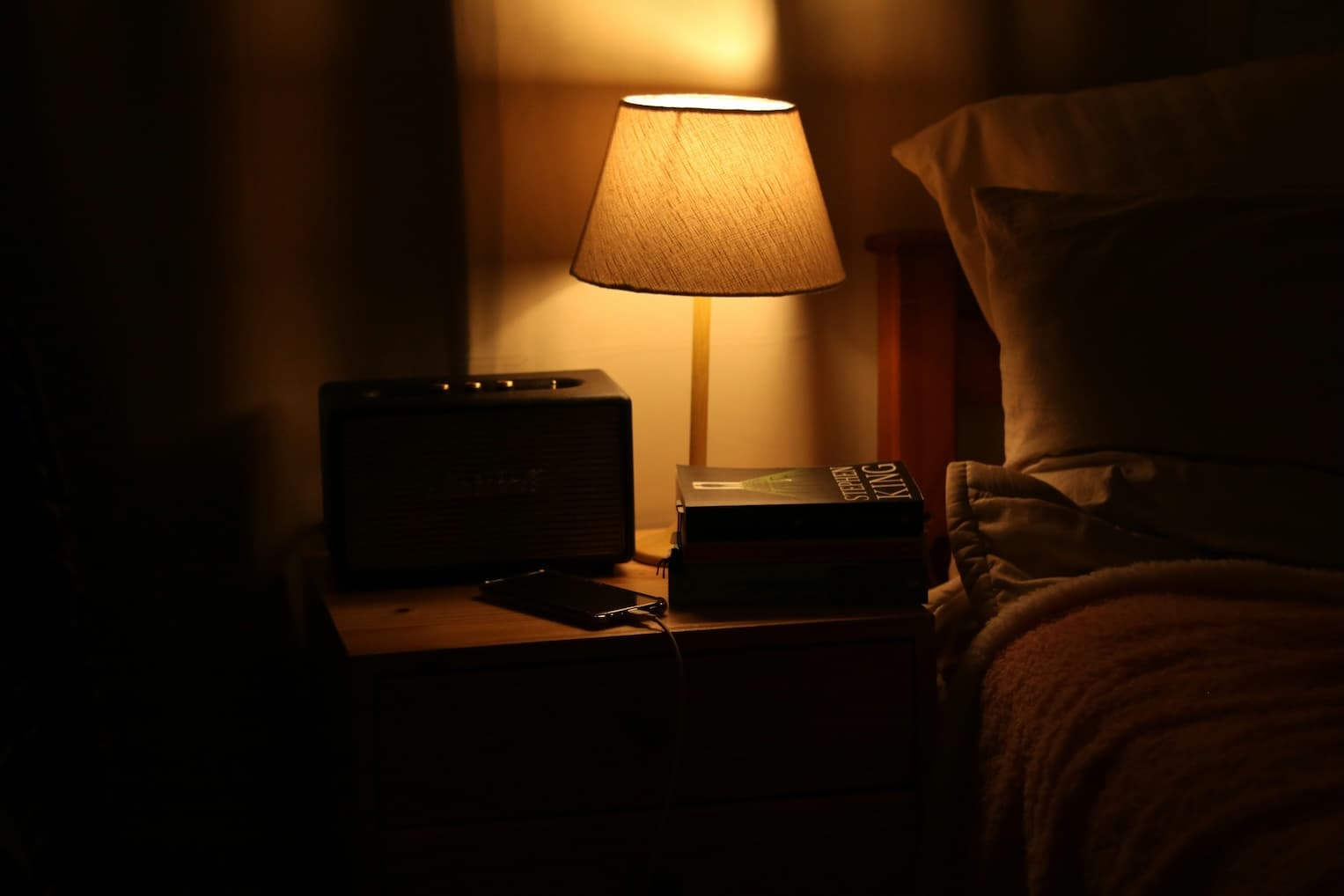
- Keep your book within reach. My iPad Mini lives on my nightstand. When I get into bed, it's right there. I don't have to decide to read – it's the only thing available. Environment design does the heavy lifting so you don't have to rely on willpower at 11pm.
- Read with no pressure. I read for 10 to 30 minutes, depending on my energy. Some nights I'm sleepy after two pages and that's fine – I close the book and drift off. Other nights I get absorbed and read for half an hour. The point isn't a set page count or time commitment. It's the routine itself: get in bed, read, sleep. Let your body decide when it's done.
Even ten minutes of reading before bed adds up faster than you think. At an average pace, that's about 9 pages a night – roughly a book every month without any other reading time. But the real win isn't just the books. It's calmer nights, better sleep, better mornings, and the satisfaction of replacing a mindless habit with one that actually makes your life better. I track every session in ReadingHabit so I can see the pattern building. It's one thing to feel like you're reading more, and another to see it in your data.
Start tonight. Swap the phone for a book. Give it two weeks and see what happens.
Build your bedtime reading ritual
ReadingHabit tracks every session, shows your daily streak, and helps you stay consistent (even on tired nights). Join the waitlist for early access.