How to Get Into Reading (When You've Never Been a Reader)
Never been a reader? Here's how to start. Pick the right first book, build a tiny habit, and make it stick without forcing it.
 Lucas Bewersdorff
Related reading
I Read Every Morning for 30 Days
I read every morning for 30 days and logged almost every session. The real numbers, the mornings my log missed, what changed, what didn't, and whether it stuck.
Reading Isn't Natural. That's the Point.
Humans evolved to speak, not to read. Reading is a skill your brain builds from borrowed parts – which is why practice changes it, even in adults.
How Many Books Should You Read in a Year?
There's no correct number of books to read in a year. Here's what most people read, why a borrowed goal fails, and how to build one from your own day.
The Books People Gave Me Just Sat There
For most of my twenties, I kept a small pile of books I hadn't read yet, and wanted to read. People kept giving them to me – birthdays, Christmas, a colleague who'd just finished something great and thought of me – because at some point I'd said out loud that I wanted to read more. Every one of those was a kind, well-aimed gesture. All of them sat there. Then the pile started looking more like a threat.
I know the story people tell themselves about this: I'm not a reader. But that just isn't true. For what it's worth, I'm not writing this as someone who always read. School ground the habit out of me and I went years without finishing a single book.
Why It Never Stuck Before
Two things went wrong every time I tried (it wasn't willpower).
The first was the book. My whole idea of reading had been set by school – Othello, Death of a Salesman, To Kill a Mockingbird – books chosen by a curriculum, read against a deadline, and followed by a report. So when I tried to restart as an adult, I reached for the same category: serious, respectable, the book you'd love to be seen holding. I'd get a couple of pages in, stall, and take the stall as proof I wasn't a reader (it wasn't). It was proof I'd picked a book I didn't want for reasons that had nothing to do with wanting it. If reading currently feels like homework to you, that can be fixed.
The second one is the real killer: nothing ever told me it was working. You read for twenty minutes on a random Tuesday and then nothing happens. No total going up, no sense of accumulation. A new gym habit at least gives you sore legs. Reading gives you a slightly different bookmark position. Beginners usually quit because it's silent.
Both of those have straightforward fixes.
Pick a First Book You'll Actually Finish
Three filters to get you started with something that suits you.
Real interest beats everything. Eventually this is the only one that matters. The correct first book is the one you really want to read, not the one that would look good on your shelf. Thriller, romance, celebrity memoir, the novelization of a film you liked – all fine, all count. Nobody is grading this.
Short chapters matter more than a short book. A 300-page book with four-page chapters is easier to start than a 200-page book written in one long breath, because short chapters mean the smallest window you have is still enough to finish something. Two minutes waiting for a train can close a chapter. Small wins early on is all you need.
Format of choice. Paperback, ebook, phone, audiobook – all of it counts. I read almost everything on an iPad mini. The idea that reading only really counts on paper keeps a lot of people out of a hobby they'd enjoy, for no good reason.
If you want a longer shortlist, check out Six Short Books to Get You Back Into Reading. Two possible fits that clear all three filters:
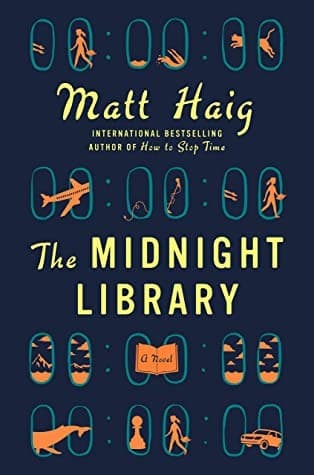
The Midnight Library
by Matt Haig
A woman stuck between lives gets to try out the versions of herself she didn't pick. Short chapters, a premise you can hold in a single sentence, and enough pull that people who hadn't finished a book in years finished this one. A really easy book to fall into.
Est. read: 5h 3 min
Get your reading estimateBorn a Crime
by Trevor Noah
Noah's memoir of growing up mixed-race in apartheid South Africa, where his existence was literally illegal. The chapters read like standalone stories, so one sitting gets you a finished piece of it, and it's genuinely funny in places you won't see coming.
Est. read: 5h 3 min
Get your reading estimateStart With Two Minutes, Attached to Something You Already Do
Every other article about this says fifteen minutes a day. I'd start with two.
Two minutes of reading isn't worth much (it's basically nothing), but two minutes survive everything. The bad day, the late night, the flight, and so on. At fifteen minutes, the answer to "did I read today?" is going to be no about twice a week. At two minutes it's always yes, and that answer is the thing you're actually building. (This is BJ Fogg's tiny-habits idea, more or less. I wrote my thesis on habit formation, and this part held up best in my own life.)
The other half is where you put it. Don't add reading to your day as a new thing to remember. Staple it to something already automatic: after you pour the coffee, when you sit down on the train, once you're in bed. The existing routine becomes the cue, so you're never deciding to read – you're doing the next thing in a sequence you already run without thinking.
You'll read longer than two minutes most nights, and that's the point. Just never let the good nights redefine your minimum. I went deeper on this in How to Build a Reading Habit.
Make It Visible, Then Keep a Next Book Ready
Now back to the second problem, the silence. This is what decides whether any of the above survives past week two.
You need something that turns reading into visible evidence. Days in a row is the strongest signal I know – a number that only goes up if you show up, and that you'd rather not break. Minutes read works too, so do pages if pages motivate you. The specific metric matters much less than the fact that something is keeping score, because early on, before reading is enjoyable enough to be its own reward, that count is what carries the habit.
Another failure point arrives sooner than you'd expect. You finish book one, feel great about it, and then spend a couple of days not choosing the next one. The habit dies in that gap far more often than it dies mid-book. Fix it in advance by keeping two or three books queued while you're still reading the current one. That queue is what readers call a TBR list, and yours does not need to be a hundred books long. Three is plenty. Three is better.
Build your first reading stack
The free TBR Stack Planner lets you line up your next few books and see roughly when you'll finish each one. That way there's always a next book waiting.
Plan your TBR stackYou're a Reader Now
A few months in, something will flip. It's hard to say "I'm not a reader" while holding your fourth finished book of the year. Nobody hands you the title of being a reader, either. It shows up when you've stopped deciding whether to read tonight.
You don't have to be fast about it either by the way. I'm a slow reader and always have been, and if you're worried about your pace, it's probably normal. Speed and volume sort themselves out later, and both are a byproduct of consistency anyway.
So pick a book today (the interesting one, not the impressive one) and read two minutes of it tonight. That's all it takes. You got this!
Your first book is easier with a plan
ReadingHabit helps brand-new readers start small, keep a streak, and watch the pages add up. Join the waitlist for early access.