Reading Isn't Natural. That's the Point.
Humans evolved to speak, not to read. Reading is a skill your brain builds from borrowed parts – which is why practice changes it, even in adults.
 Lucas Bewersdorff
Related reading
How Many Books Should You Read in a Year?
There's no correct number of books to read in a year. Here's what most people read, why a borrowed goal fails, and how to build one from your own day.
The Research Behind Reading Speed
Where the 238 words-per-minute figure comes from: Brysbaert's 2019 meta-analysis, what it pooled, what it left out, and why speed-reading claims fail.
Is one page a minute fast? Five bands for what counts as a good reading speed, what is normal, and why the number you already have is almost certainly fine.
Speech Is an Instinct. Reading Is Not.
I don't remember learning to read. I could read a little before I started school, school taught me the rest, and from then on I devoured books (on family vacations, I packed more books than anything else). Reading felt as natural to me as talking.
It isn't though. Every human society has a language, and children pick theirs up from the people around them, without lessons. Reading doesn't work that way. Someone has to teach it, and it takes years; in 2024, 739 million adults still lacked basic literacy skills.
Most of us never even think about this, because reading feels effortless once you can do it. So if reading isn't natural, what is it? And what does that mean for anyone who wants to read more?
Measure the skill you built
The free Reading Speed Test times a short silent read and checks your comprehension – your WPM and PPM in a few minutes, no signup needed.
Take the free speed testYour Brain Has No Reading Organ
Humans have had the capacity for language for at least 135,000 years, by one recent estimate. The oldest known writing is just over 5,000 years old (far too recent for evolution to do its thing). Maryanne Wolf, who studies the reading brain, opens Proust and the Squid with that point: "We were never born to read."
So learning to read borrows circuits that evolved for other jobs. The neuroscientist Stanislas Dehaene calls this neuronal recycling. A patch of the visual system is already good at recognizing objects and faces. Reading takes it over for letters and words and connects it to the areas that handle speech. Researchers call it the visual word form area.
Two caveats: neuronal recycling is a well-supported model, not settled fact; and "visual word form area" is just a label for one part of a bigger reading network.
The Circuit Gets Built by Repetition
The shape of a letter doesn't sound like anything. The link between "b" and its sound is a convention: someone taught it to you, and you repeated it thousands of times.
That repetition leaves traces. In a 2010 study, researchers scanned 63 adults in Portugal and Brazil: 10 who never learned to read, 22 who learned as adults, and 31 who learned as children. In the readers, the visual word form area responded strongly to written words and a little less to faces (the two compete for that spot). Even spoken sentences switched it on. And most of these differences showed up in people who learned to read as adults, too.
A 2017 study got closer: 21 adults in India, nearly all women in their thirties and most unable to read a single word of Hindi, took six months of reading lessons. Afterward, their visual cortex worked more in sync with structures deeper in the brain, and the people whose reading improved most changed most.
You can feel the finished circuit from the inside. Look at a word in a language you read and try not to read it. I read subtitles even when I understand every word of the audio, and I read signs and packaging without actively deciding to. Psychologists have measured that pull since 1935: ask people to name the ink color of the word "blue" printed in red, and they slow down.
Not Every Script Builds the Same Brain
Once the circuit is built, it's built for whatever you learned to read. A 2005 analysis pooled brain-imaging studies of people reading alphabetic languages, Chinese, and Japanese. The main finding was how similar they were: every writing system used mainly the same network, with the visual word form area in almost the same spot. The differences were in the details: in another 2005 analysis, Chinese readers leaned more on an area in the left frontal lobe and on visual areas on both sides of the brain, while alphabet readers leaned more on left-side areas that turn letters into sounds. A shared core with local differences.
Even with the same alphabet, building the circuit can take longer. In a study across 13 European languages, children learning most of these languages read simple words accurately and fluently before the end of their first school year. English was the slowest: its learners needed more than twice as long as children learning a language with consistent spelling, mostly because English spelling is so irregular (think "though", "through", and "tough"). German spelling is consistent, which might be why English spelling never bothered me: by the time I started reading in English, I could already read.
The easiest way to feel an unbuilt circuit is to travel. I've stood in front of Chinese, Thai, Hebrew, Arabic, Cyrillic, and Greek on street signs, menus, and transit stations, unable to read a word. I pointed a translation app at them, learned a few symbols, and guessed from context. (That's what every page looked like before you learned to read.)
Built, Not Born
I don't buy "I'm just not a reader". Nobody is born one, and every reader you know built the skill (How to Get Into Reading covers where to start). Mine even fell out of use once: school turned reading into homework, and I went years without finishing a book. When I came back, my focus was rusty and the pages were slow. Both got better with practice.
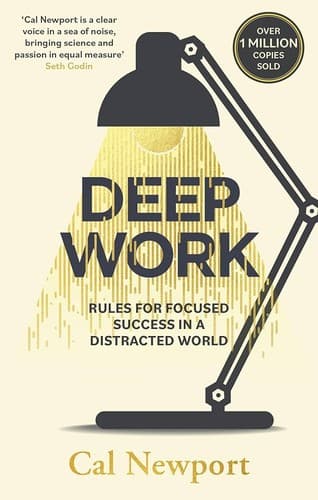
Same with hard books. Deep Work slowed me to 0.4 pages per minute, against my usual 0.7, and to me that's a heavier rep (excuse the gym speak), not a failure (more on that in How to Read a Difficult Book).
Practice won't make everyone fast, and it doesn't have to. But it's where the evidence points: the speed-reading review I covered in The Research Behind Reading Speed found no shortcut that keeps your comprehension intact, and its advice for reading faster was to practice reading and build your vocabulary.
Nobody Handed You This One
Speech happened to you. Reading is something you did over years, mostly without noticing. That's a reason to keep going, because the circuit only gets better with use.
The practice isn't glamorous: reading, most days, for a while. Mine is two daily reading windows, one in bed after waking up and one before sleep (How to Build a Reading Habit has the full setup). And you've been practicing this whole time: every word you just read ran through a circuit you built.
A skill you built deserves the practice
ReadingHabit turns daily reading into a visible streak, so the circuit you spent years building keeps getting used. Join the waitlist for early access.