How to Read a Difficult Book (Without Feeling Dumb)
Dense classics and heavy nonfiction need a method. The three moves that get you through (and enjoy) a hard book.
 Lucas Bewersdorff
Related reading
Horror Books for People Who Hate Horror
Eight books that run on dread instead of gore, with notes on each about violence, animal harm, body horror, and cruelty, so nothing ambushes you.
My Reading Recap for September 2026
What I read in September 2026, which book was a hit and which one I should have quit, plus the streak, hours, pages, and sessions behind the whole month.
Reading Speed vs Comprehension
Does reading faster hurt comprehension? What the research says about the trade-off and where it starts to cost you. Extra: a one-minute check for your own reading.
Too Slow
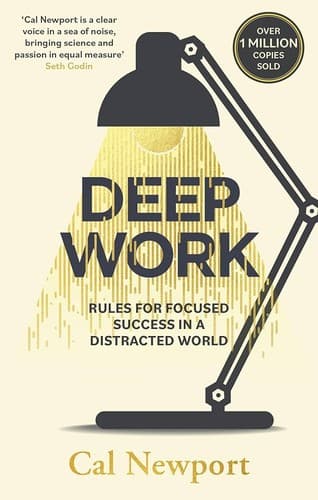
Deep Work took me fifteen reading sessions. My dashboard logged my average speed at 0.4 pages per minute, making it the slowest book I have ever tracked. I thought, "I'm too slow for this".
Almost everyone has a book that does this to them: a classic, a philosophy paperback, a nonfiction title everyone else seems to have absorbed over a weekend.
Why Some Books Are Hard
Four things make a book hard to read:
- Idea density. Three ideas per paragraph, each one forcing you to stop. Your pace naturally slows down, which makes it feel like failure.
- Assumed background. The author expects you to already know the field, the references, and the argument they're responding to.
- Style. Old-fashioned grammar, a formal writing style, or sentences with three layers.
- Language. Reading in a language that isn't your first adds difficulty on top of all the above. (I read almost only in English as a native German speaker, and it's worth every bit of the effort.
My biggest issue is usually density. Deep Work is written in plain language, but every second paragraph brings up something you have to stop and think about. I was doing what the sentences asked. At 0.4 pages per minute, I was reading the book properly.
Turns out that your pace on a difficult book measures the book, not you.
Before You Start a Hard Book
A hard book stalls for one of two reasons: you never decided why you were reading it, or you never figured out how long it would take.
The first is easy to fix. Set the intention before page one – one sentence about what you want out of this specific book. On an easy book, the intention can be optional; the story carries you. On a hard one, it's what gets you through the chapter that isn't paying off yet. Mine for Deep Work was concrete: I wanted a working theory of attention I could apply to my own days. That intention got me through the parts I found dull.
The second is also figureoutable. Three hundred dense pages at your reading speed on hard material is not the same as three hundred pages of fiction. Work it out before you start.
Turn a doorstop into steps
Enter the page count and your reading speed. The free Reading Time Calculator tells you how long a dense book will actually take.
Calculate read timeThe Three Moves That Get You Through
1. Let the habit do the chunking. I never sat down and planned Deep Work into fifteen sessions. My two daily reading windows just turned it into those fifteen sessions. All I did on purpose was aim for section boundaries instead of stopping mid-argument, so each session ended at a clean point. That's why actually finishing a hard book is far easier for a reader who already has a daily reading session than for one who doesn't. If you can spare a longer reading block now and then, that's where a dense book thrives – you only pay the "where was I?" tax once.
2. Don't re-read the paragraph. The instinct on a difficult page is to go back and "get it right" before continuing. Resist it. Dense writers build meaning across pages (not inside sentences), so the thing that confused you on page 40 often resolves itself by page 44. Re-reading in place burns the whole session on one paragraph and teaches you that the book is impossible. Mark it, move on, and come back at the end of the chapter if it still matters. Usually it doesn't.
3. Get it explained, then go back to the book. When a passage simply doesn't make sense, I stop trying to be tough about it. I'll ask an AI assistant to put the argument in plain terms, or find a lecture or a podcast where the author says the same thing out loud (usually in simpler language). A couple of minutes, then back to the page – which now reads fine. Most readers feel bad about doing that, but let's be real: nobody hands out extra credit for suffering through a paragraph with no help.
Slow And Steady
Expect your pace to drop on hard material. Mine roughly halves. If you've measured your reading speed (worth doing once, the Reading Speed Test takes about two minutes), treat that number as your baseline, not a promise. A dense book will come in well under it, and that's fine.
I spent a while treating my pace as a scoreboard. It isn't one, it's an instrument. Slow is the cost of comprehension. The books I read most slowly are the ones I can still remember years later.
Deep Work
by Cal Newport
Newport's argument for focused, undistracted work as the decade's highest-leverage skill. Plain language carrying a heavy idea load.
Est. read: 5h 10 min
Get your reading estimateOne Session At A Time
Here's what actually got me through the hardest book in my library: nothing impressive. A little over two weeks of ordinary evenings, each lasting less than 20 minutes, all of them logged. No breakthrough, no unusual discipline, no moment when I magically got smarter. Tracking it turned the book into a sequence instead of a monolith.
The difference between people who finish hard books and those who don't isn't intelligence. It's whether the book gets broken into pieces small enough to read a normal Tuesday.
So pick the hard one that's been sitting there. Find out how many pages it really has, decide what you want to get from it, and read one (full) section tonight. Then do the same tomorrow. That's the entire method.
Finish the hard one
ReadingHabit turns a dense book into a sequence of tracked sessions. Join the waitlist for early access.