The Case for Reading in the Morning
Your willpower is highest before the day drains it. Here's why morning reading beats evening reading for consistency, and how to make it a daily ritual.
 Lucas Bewersdorff
Related reading
I Read Every Morning for 30 Days
I read every morning for 30 days and logged almost every session. The real numbers, the mornings my log missed, what changed, what didn't, and whether it stuck.
Reading Isn't Natural. That's the Point.
Humans evolved to speak, not to read. Reading is a skill your brain builds from borrowed parts – which is why practice changes it, even in adults.
How Many Books Should You Read in a Year?
There's no correct number of books to read in a year. Here's what most people read, why a borrowed goal fails, and how to build one from your own day.
The Easiest Reading Session of Your Day
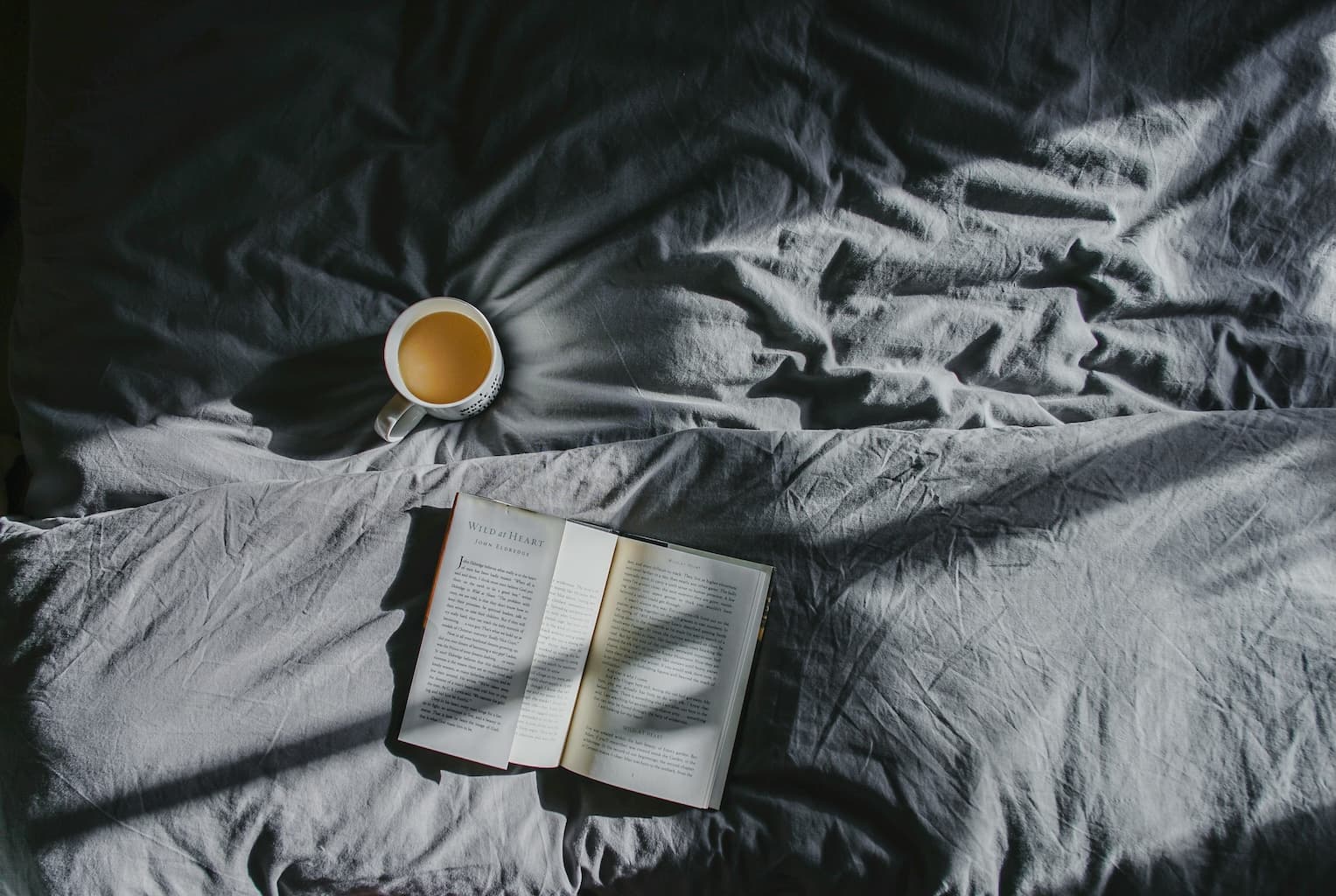
My iPad Mini sits on my nightstand every night. Most mornings, it's the first thing I reach for. I wake up – usually without an alarm – roll over, open Apple Books, and pick up where I left off. Some days I read for five minutes, some days for twenty. It depends on the morning. There's no ritual about it, no elaborate routine. The book is just there, and so I read.
Before I started doing this, that slot belonged to my phone. I'd open Instagram, Reddit, or whatever else the algorithm served up, and twenty minutes would vanish into nothing. I never felt worse for it exactly – but I never felt better either. It was empty time. Replacing it with reading only required putting the iPad where the phone used to be.
I don't read every single morning. Some days I need to get up immediately, or the morning just doesn't allow it. But on the days I do, it sets a tone for the rest of the day that's hard to explain until you've felt it. There's momentum to starting with something intentional – and the satisfaction of already having a reading session behind you before your day has even started. It's the lowest-effort reading window I've found. When I finally counted, though, it was also the one I skipped most.
See how much a morning session adds up to
Use the free Reading Time Calculator to find out how many books 15 morning minutes translates to per year.
Calculate your reading timeThe Science of Willpower Depletion
There's a well-known concept in psychology called ego depletion, popularized by researcher Roy Baumeister. The idea is simple: willpower is a finite resource that gets used up throughout the day. Every decision you make – what to wear, what to eat, how to reply to that email, whether to push back in a meeting – chips away at your capacity to make more decisions. By the time evening rolls around, you've made hundreds of small choices, and your brain is looking for the path of least resistance. That path is almost never "pick up a book."
This is why evening focus problems hit so hard. It's not that you don't want to read, but that your ability to choose reading over easier alternatives has been drained all day. I notice this myself. Morning reading feels sharper, more engaged. I'm absorbing paragraphs, not re-reading them. In the evening, especially after a long day, I sometimes catch my eyes moving across the page while my mind is somewhere else entirely.
There's a biological angle too. When you wake up, your body produces a spike in cortisol called the cortisol awakening response – a natural burst of alertness that peaks about 30 minutes after you open your eyes. It's essentially free focus. You don't have to earn it or manufacture it. It's just there, and it's gone by mid-morning. Reading during this window means you're working with your biology instead of against it.
None of this means you shouldn't read at night – I love bedtime reading, and it has its own benefits for sleep and winding down. But evening sessions are more vulnerable to "I'm too tired" and "I'll read tomorrow instead." Morning reading is your insurance policy. If life gets chaotic and the evening session doesn't happen, you've already read today.
How to Set Up a Morning Reading Routine
The reason morning reading works isn't motivation – it's friction removal. You're not trying to summon willpower at 7 AM. You're just making reading the easiest thing to do in a moment where you haven't started doing anything else yet. Here's how to set it up:
- Put your book within arm's reach. My iPad Mini lives on my nightstand. If you read physical books, put one on your pillow or next to your alarm. If you use a Kindle, leave it on the charger by the bed. The idea is that picking it up requires zero effort – literally reach over and start.
- Read before you check your phone. This is the single most important step. Once you open your email, your notifications, or any social feed, your attention scatters. Your brain switches from "quiet morning mode" to "reacting to the world" mode. I try to keep my phone untouched until after I've read. I don't always succeed, but the mornings I do are noticeably better.
- Commit to just five minutes. Not thirty. Not even fifteen. Five. Most days you'll read more – I usually end up reading for ten to twenty minutes – but setting the bar at five means there's never a reason to skip it. This is the tiny habits principle in action: make the habit so small it's hard to say no to.
- Stack it onto your wake-up cue. Habit stacking means attaching a new habit to something you already do. You already wake up and lie in bed for a moment. That moment is the cue. Open the book instead of opening your phone.
- Let it move with you. Some mornings I don't read in bed at all – I get up, make coffee, and take the iPad to the couch. The reading still happens, just in a different spot. Don't lock yourself into one location. The habit is reading in the morning, not reading in bed.
On those couch mornings, there's sometimes soft music in the background, sometimes silence. It's a calm, unhurried start to the day – the kind that makes you wonder why you ever spent that time scrolling instead.
Morning Reading vs Evening Reading
This isn't a competition. Morning and evening reading are different experiences, and they're good for different reasons.
Morning reading feels intentional. You're choosing to start your day with something meaningful before the world starts pulling at your attention. It has a "getting things done" energy – focused and proactive. Evening reading feels more like leisure. You're done for the day, you're winding down, and the book is a reward rather than a practice. There's a reason bedtime reading helps with sleep – it signals to your brain that the day is over.
The practical difference comes down to reliability. Morning sessions have fewer enemies. You're not tired yet, you haven't been drained by decisions, and there's usually nothing competing for your attention at 7 AM. Evening sessions are more vulnerable – a long day, a late dinner, one more episode, "I'll read tomorrow." When life gets busy, morning reading survives. That's why I think of it as the anchor.
On most days I read both morning and night, though not always – some days only allow one or the other, and that's fine. If someone asked me which one to start with, I'd ask them about their usual routine first. If your mornings allow for even a few minutes of quiet time, morning reading is a great fit. If your evenings are where the space is, that works too. Both is ideal – but trying to force both into every single day isn't sustainable for most people. If you're curious, try it on a calm weekend first and see how it feels. You might find, like I did, that having two reading windows makes the habit feel much more secure – not because you need both every day, but because if one doesn't happen, the other already did.
Turning Morning Minutes Into Yearly Books
Fifteen minutes doesn't sound like much. But run the numbers. At an average reading speed of about 0.95 pages per minute – which is typical for most adults – fifteen minutes gets you roughly 14 pages a day. That's around 5,200 pages a year, which translates to somewhere between 17 and 21 books depending on length. From just fifteen minutes each morning.
Bump that to thirty minutes and you're looking at 32 to 40 books a year. That puts you in the top fraction of readers in most countries – and you haven't even counted any evening sessions.
The point isn't to obsess over the numbers. It's that morning reading doesn't need to be a long session to matter. If you ran the full yearly calculation, even a modest daily session adds up to a reading life that most people assume requires hours of free time. It doesn't. It requires ten to fifteen minutes and a book on your nightstand.
Plan your morning reading goal
The free Reading Goal Planner calculates exactly how many books your morning minutes add up to across a year.
Plan your reading goalRead Before the Day Reads You
You don't have to be a morning person to be a morning reader. You just have to sequence reading before scrolling. That's the whole trick.
If you take one thing from this article, let it be this:
- Put a book on your nightstand tonight. iPad, Kindle, paperback – whatever you read on.
- Reach for it before you reach for your phone. Five minutes is enough.
- Let the rest take care of itself. Most days, you'll read more than five. Some days you won't. Both are fine.
Morning reading changed how my day starts. I'm not claiming it transformed my life. But there's a real difference between starting the day by absorbing something you chose and starting it by reacting to whatever your phone throws at you. Try it tomorrow and see.
Make every morning a reading morning
ReadingHabit tracks your sessions, shows your pace, and builds a streak that keeps you reaching for the book first. Join the waitlist for early access.