How to Read More Without Speed Reading
Speed reading courses don't deliver. The actual way to read more is to read more often. Here's the system that works.
 Lucas Bewersdorff
Related reading
Why Do I Read? My 6 Reasons for Reading Books
Why do I read? To learn things. Under that answer: one idea to apply, my work, talks with my partner, the people who hand me books, and a sustainable habit.
Why Scary Books Beat Scary Movies
Scary books are often scarier than movies because a book never has to show you the monster. Why it works, two book-vs-film proofs, and where films still win.
How to Build a Reading Habit With Friends
Build a reading habit with friends using one of four mechanics: a buddy read, parallel streaks, a weekly check-in, or a shared TBR. Also: which apps help.
The Speed-Reading Trap
I've watched the speed-reading pitch land in my feed a hundred times. The shape barely changes: a clean graphic, a number on screen ("4× your reading speed"), a thirty-day promise, a course price tucked underneath. I wasn't tempted by the pitches (I never paid for a course) but I was curious enough to actually try the underlying techniques, lifted from a couple of forgotten YouTube videos. Finger-pacing. Chunking words into groups of three. Soft-focus peripheral-vision tricks. I gave each one a real shot, on books I was actually reading, for long enough to know if they were going to take.
None of them stuck. Not because the techniques are fake – I genuinely think some readers get something real from them – but because the part of reading I cared about (the slow encoding into memory, the inner-voice version of the sentence, the sitting-with-it) was exactly the part the techniques were designed to remove. The thing being optimized away was the thing I was there for. So I stopped trying to read faster and started trying to read more often. The frequency move worked. The speed move didn't. This article is the version of that lesson I'd hand to someone considering a course.
What Speed Reading Actually Delivers (Hint: Not Much)
The classic reading-speed research (Carver in the 90s, Rayner's lab into the 2010s) agrees on the same finding: comprehension starts dropping above roughly 400 WPM. Below 400, you can read faster with little cost; above 400, you start losing the parts of the read you'd want to keep. The best-designed studies of actual speed-reading interventions land around a 20–25% gain, not the 200%+ courses promise. The gap between marketing and science here is large enough to be its own genre.
Skim reading sits in a separate category: it's a real, useful skill, and I use it deliberately when I'm deciding whether a book deserves my time. I'll skim the introduction, jump to a couple of mid-chapters, see if the writing earns a full read. That's triage, not reading. The two are easy to confuse because they share a vocabulary ("I read it fast"), but their goals are different: skim asks "is this worth my real attention?" Reading asks "what does this actually say?" Speed reading mostly tries to do the second using the first's technique. The 200% claims it's built on don't survive contact with the comprehension data.
Find your real baseline
The free Reading Speed Test gives you your actual WPM and PPM – knowing the number is what lets you stop trying to beat it.
Take the free speed testThe System: Frequency Beats Speed Every Time
The system that actually moved me from "I want to read more" to "the books are piling up" has three parts. All of them survived contact with my life – travel, bad weeks at work, when willpower wasn't on my side. The three together are doing nearly all the work.
- A tiny daily anchor (ten minutes). This is BJ Fogg's principle, which I dug into properly when I wrote my thesis on habit formation. Make the baseline embarrassingly small. The trick is that ten minutes is too low to skip; you can read ten minutes on a sick day, on a plane, after a meeting that ran too long. I made this argument in reading 10 pages a day already, the point here is more specific: ten minutes a day, at any speed, beats forty minutes once a week at any speed. The compounding only works when the cadence doesn't break.
- Two fixed windows: morning and bedtime. One window is fragile. Two windows make the habit nearly unbreakable, because a bad evening can be salvaged by the morning, and vice versa. I read on my iPad mini in bed at night and again before getting out of bed in the morning. Both are stacked onto existing routines (sleep, waking) so I'm not making a fresh decision each time – the cue does the lifting. Check out the deep dives for each reading window: the case for reading in the morning and reading before bed.
- Trust the compounding math. Ten minutes a day at a slow 180 WPM still gets you 13–14 books a year at average book lengths – more than the average American adult finishes. My own settled pace is around 167 WPM (I'm a slow reader, and I've made peace with it), and on this rhythm the books just stack. The slow daily reader outpaces the fast weekly reader by a margin that, when you actually do the math, feels unfair.
This is the system I use. Nothing in it is optimized for impressive numbers; it's optimized for surviving the worst week of the year. That's the whole reason the books pile up at all.
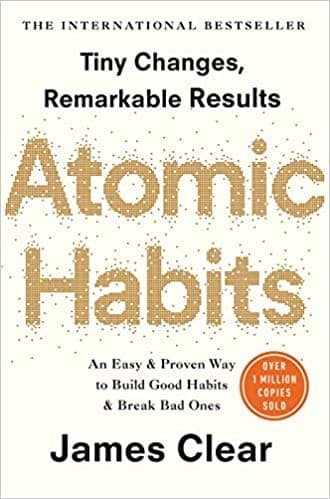
Tiny Habits
by BJ Fogg
Fogg's case that habits stick when the baseline is embarrassingly small. I read it while writing my thesis on habit formation, and the 'make it tiny' rule is what eventually became my ten-minutes-a-night reading anchor.
Est. read: 5h 36 min
Get your reading estimateTwo Failure Modes That Kill Volume
There are two reliable ways to kill reading volume, and I've burned through both.
The first is saving reading for the weekend. Weekdays were "too busy", weekends would be the catch-up – 90 minutes Saturday, 90 minutes Sunday, more than enough on paper. But the weekend, when it arrived, never looked like the version I'd planned: errands, people, the fact that Saturday morning energy isn't actually built for the same thing as Tuesday evening focus. The reading marathon I'd lined up on Wednesday silently evaporated. Weekend reading is a bonus on top of a weekday habit; it isn't the engine. If you're not reading on a Tuesday, you're not reading.
The second is "I'll start tomorrow". Tonight is bad, something came up, I'm tired – tomorrow I'll be back on track. The next day, something else comes up, and I forget what I was even meant to be back on track with. The gap between intent and a tiny daily action is where reading dies. Ten minutes today, even badly, beats fifteen minutes tomorrow that you never take.
The One Legitimate Speed Bump
There's one technique inside the speed-reading universe I'd cautiously vouch for, and it's narrower than the marketing wants it to be. Reducing subvocalization – the silent inner-voice version of a sentence – does let you move faster through specific kinds of material: reference text, lists, indexes, anything you're scanning to extract a specific piece of information. Triage, basically. If you're trying to find the chapter where the author makes the argument you remember, you don't need to read each sentence aloud in your head.
For actual reading – fiction, narrative nonfiction, anything you want to remember a week later – subvocalization isn't a bug to remove. It's the read. The inner voice is part of how language gets encoded into memory. Trying to read with the encoder turned off is a different activity that just happens to use the same eye movements. I went over the full retention argument in how to actually absorb what you read, the short version: when the goal is "remember this", slowing down is the move.
See how 10 minutes a day adds up
The Reading Goal Planner converts your tiny daily anchor into a realistic yearly book count – at your speed.
Plan your reading goalRead More by Reading More Often
If you take one thing from this, let it be this point: stop optimizing your speed; start optimizing your frequency. The slow reader who reads daily outpaces the fast reader who reads sometimes, by a margin so wide the math feels unfair. There is no version of the speed-reading pitch that beats "ten minutes, twice a day, every day, at the pace your brain actually reads." The course you didn't buy was always selling you the wrong variable.
The part willpower never fixed for me, but a visible streak did, is the don't-break-the-chain feel – a number that says "you've shown up nine days in a row" makes the tenth day automatic in a way that resolutions never did. That's why ReadingHabit's whole spine is the streak. The system isn't speed. It never was.
Read more by reading more often
ReadingHabit tracks every session – short ones count. Watch the books add up. Join the waitlist for early access.