Reading Is the Best Attention Span Training
Short-form content broke your focus. Reading is how you rebuild it. Here's why books are the best training tool for sustained attention.
 Lucas Bewersdorff
Related reading
8 Books to Read This Fall (2026)
8 best fall 2026 books to read, from BookTok favorites to this year's top hits, who each is for and estimated reading time.
I Read Every Morning for 30 Days
I read every morning for 30 days and logged almost every session. The real numbers, the mornings my log missed, what changed, what didn't, and whether it stuck.
Reading Isn't Natural. That's the Point.
Humans evolved to speak, not to read. Reading is a skill your brain builds from borrowed parts – which is why practice changes it, even in adults.
Your Brain Isn't Broken, But It Is Out of Shape
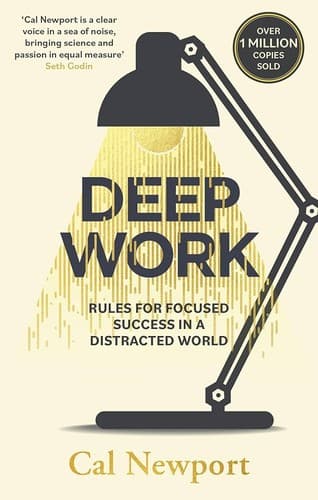
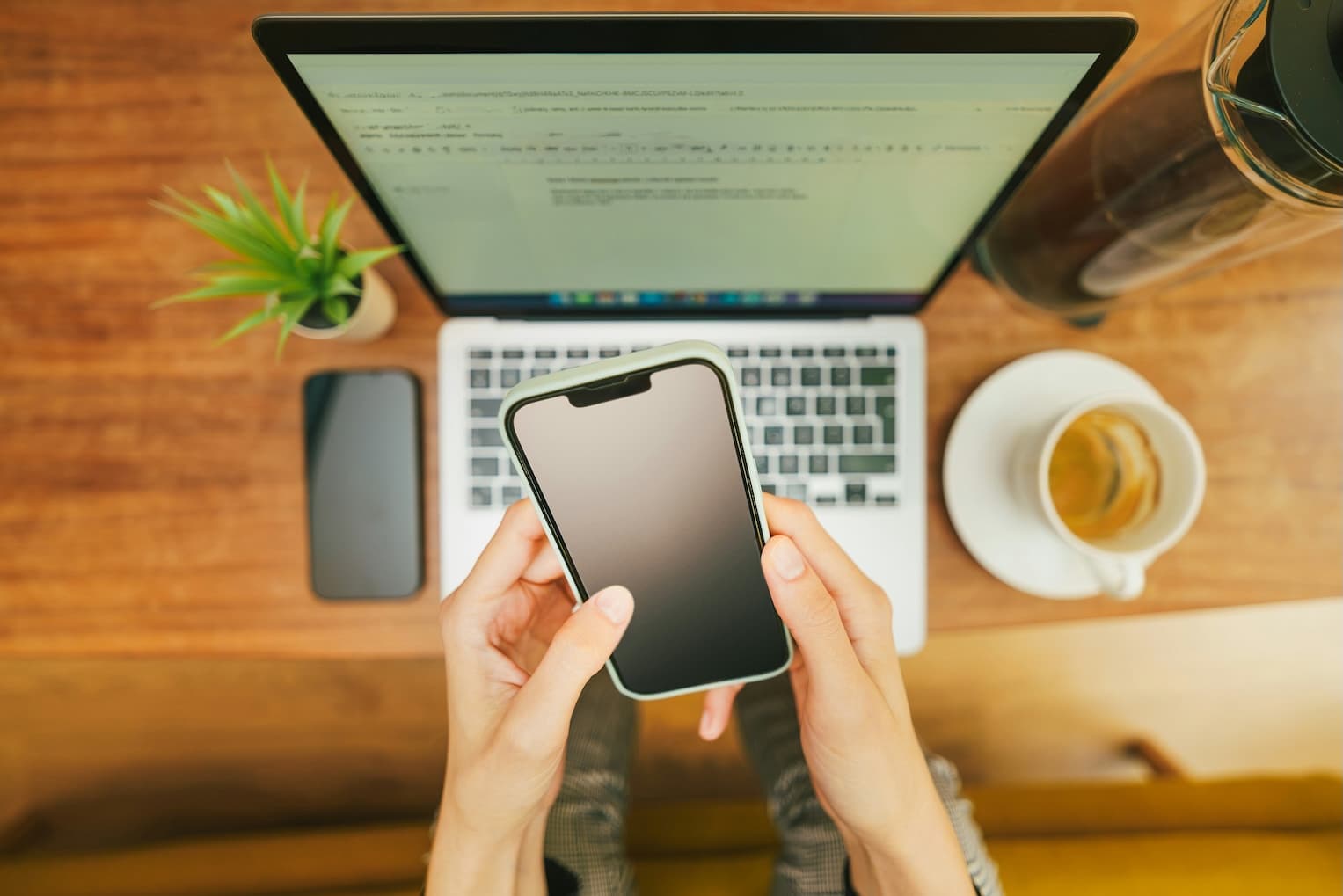
A few months ago, I was in bed trying to read Deep Work by Cal Newport – a book literally about how to reclaim sustained focus. About four pages into a dense chapter, I caught myself doing something I'd been doing for most of the evening: tapping the screen to check the progress indicator in Apple Books to see how many pages were left. Each time I checked, the chapter seemed to have stretched a little further. I'd drift to a work task, snap back, realize I had no idea what the last paragraph said, scroll back, re-read, lose it again.
Nothing was distracting me. No phone in the room, lights low, quiet apartment. Just a book in my hands and a brain that refused to settle on the page in front of it. That was the night I stopped thinking of this as a focus problem and started thinking of it as a fitness problem. My attention wasn't broken – it was out of shape. And what something out of shape needs isn't a hack or a productivity trick. It needs training. Here's the training plan.
Deep Work
by Cal Newport
Newport's case for focused, undistracted work as the highest-leverage skill of the decade. I read it across 15 sessions at 0.4 PPM (the slowest book in my dashboard) and it's the one whose framework I still actually use.
Est. read: 5h 10 min
Get your reading estimateThe Attention Crisis in Numbers
Here's the good news first: your brain is plastic. The same neurological adaptability that let short-form content rewire your attention also means you can rewire it back. Nothing about the way your focus works today is permanent – it's a starting baseline, not a verdict.
The baseline is rough, though. Gloria Mark has been measuring digital attention at UC Irvine for two decades, and her latest number is brutal: the average time we stay on a single screen has dropped from about 2.5 minutes in 2004, to 75 seconds in 2012, to just 47 seconds today – a finding five independent studies have replicated. A 2026 meta-analysis pulling together nearly 100,000 people across more than 70 studies confirmed what most of us already feel: the more short-form video you watch, the worse your sustained attention gets and the harder it becomes to resist the next swipe. The reading data is what really stuck with me, though. Among American 13-year-olds, the share who read for fun "almost every day" went from 27% in 2012 to 14% in 2023. Nearly cut in half, in a decade.
The point of these numbers isn't to alarm you. It's to give you something concrete to train against. If your brain currently resets every 47 seconds on a screen, then a 10-minute reading session that survives without a phone-check or a mental detour is already a meaningful workout. You're not trying to hit some abstract ideal of what attention "should" be. You're trying to stretch your own current capacity, week over week. That's the whole game.
Why Reading Is Uniquely Good at Rebuilding Focus
You can train attention lots of ways – meditation, puzzle games, breathwork. They all work to a degree. Reading is different because it forces four things at once that nothing else quite combines.
The first is sustained linear attention. You can't skip ahead in a book without losing the thread – characters, arguments, and premises all build on what came before. Scrolling rewards you every swipe; a book makes you wait for the payoff. That waiting is the workout.
The second is flow state – the conditions Csikszentmihalyi described in his original research: a clear goal, immediate feedback, a challenge matched to your skill. When it's working, time disappears. I get this on every reading session that goes well – I look up thinking it's been twenty minutes and an hour has gone by.
The third is that reading is generative. Your brain isn't passively receiving images the way it does on TikTok or in a movie, it's building them. A novel hands you words; you supply the face, the room, the tone of voice. And it's not just fiction. When I'm reading a nonfiction book, my brain is still constructing the scene the author is describing, the diagram they're explaining, the situation they're walking through. That construction is sustained focus. There's no flow state in scrolling because there's nothing to construct.
The fourth (and the one that surprised me) is progressive overload. Your sessions get longer the more you read, in a way that's measurable. When I started tracking my reading sessions, my average was 5-8 minutes and I felt restless the whole time. Four months later, my average is 27-33 minutes and I'm fully absorbed.
Start your attention training
Use my free Reading Goal Planner to set a daily reading schedule that builds your focus muscle gradually.
Plan your reading scheduleHow to Use Reading as Attention Training
Treat this like a workout plan: low starting load, steady progression, and tracking that lets you see the curve. The point isn't to read more books, but to extend the time your brain can stay on a single thread. Here's the program I actually ran, plus the additions I'd recommend if I were starting again.
- Start with 10 minutes uninterrupted, phone in another room. Ten minutes is short enough that almost anyone clears the bar. No-phone-in-room is non-negotiable, because the urge to check it is the thing being trained out of you. This was my foundation.
- Build by 5-minute increments roughly week to week. I didn't structure mine this carefully, I just kept reading until it felt natural to go longer. But if you want a cleaner rule than "feel," 10 → 15 → 20 → 25 over four weeks is a good ladder.
- Track your session duration. This is the tactic I'm most evangelistic about. Without tracking, focus gains are invisible day to day. With tracking, the trend is unmistakable, and on bad days your historical average pulls you back.
- Match the book to your current capacity. Short sessions handle light fiction or memoir better than a 500-page philosophy book. As your sessions stretch, bring in denser material.
- Try attention bookends – two minutes of nothing before you start. Optional. Sit with the book in front of you and do nothing. It lets the leftover stimulation from your day settle so you're not bringing notification energy into the page.
My four months were not a clean ramp. Some weeks my average actually dropped – usually weeks I was traveling, staying at a friend's place, or otherwise out of my normal routine – followed by weeks that jumped. The trend was up but the line wasn't straight. If you have a bad week, what matters is whether you keep the habit going and protect the streak that pulls you back to the page. The training works because you keep showing up. Not because every session beats the last one.
Reading as a Counter-Movement
There's a bigger cultural moment happening here. Vinyl records, film cameras, journaling, embroidery: there's a real desire to reclaim attention from the feed. (More on that in my article on reading as the ultimate analog hobby.) Reading is the most accessible version of this resistance. No equipment, no skill curve, no subscription. You already have books, or free access to a library (or might even have a library card already). The only barrier is time and attention – and attention is exactly what we're training.
The other thing worth saying clearly: this isn't a digital detox. Detoxes are reactive – you run from screens for a weekend and then crash back in on Monday. Training is proactive. You're not avoiding short-form content because it's "bad"; you're building the capacity to choose what your attention does, instead of letting it default to whatever's optimized to grab it. That's a much more empowering frame than guilt. You're not giving things up. You're getting something back.
Find your baseline reading speed
Knowing your WPM helps you set realistic session lengths for attention training. Takes less than 3 minutes.
Take the free speed testTrain Your Brain, One Page at a Time
If you only take three things from this article, take these:
- Your attention isn't broken, it's out of shape. And like anything out of shape, it responds to training, not hacks.
- Reading is uniquely good at the work. It forces sustained linear focus, induces flow, and gets measurably easier the more you do it.
- Start small and track. Ten minutes uninterrupted, phone in another room, and a way to log session length. The trend matters more than any single session.
I built ReadingHabit to make this kind of progressive training visible. Watching your session duration grow over time is the closest thing to a fitness tracker for your attention – and it's the proof, on the days when you can't tell from inside your own head, that the focus is actually coming back.
You don't need to fix anything tonight. Just start with 10 minutes.
Rebuild your focus, one reading session at a time
ReadingHabit tracks your sessions, builds your streak, and shows your attention capacity growing. Join the waitlist for early access.