Reading Is the Ultimate Analog Hobby
The analog trend is everywhere in 2026. Here's why books are the original screen-free activity and how to build reading into your analog lifestyle.
 Lucas Bewersdorff
Related reading
8 Books to Read This Fall (2026)
8 best fall 2026 books to read, from BookTok favorites to this year's top hits, who each is for and estimated reading time.
I Read Every Morning for 30 Days
I read every morning for 30 days and logged almost every session. The real numbers, the mornings my log missed, what changed, what didn't, and whether it stuck.
Reading Isn't Natural. That's the Point.
Humans evolved to speak, not to read. Reading is a skill your brain builds from borrowed parts – which is why practice changes it, even in adults.
The Analog Trend Isn't Just Vinyl Records and Film Cameras
Most mornings I wake up without an alarm. I lay there for a while letting the natural light do its thing. My phone is in another room, out of reach. My partner is still asleep. After a few minutes of that, I reach for the iPad on the nightstand and start reading whatever I'm currently working through – right now it's The Minimalist Entrepreneur by Sahil Lavingia. Fifteen, twenty minutes of nonfiction before I check a single notification. That's been my routine for years.
For most of that time, I didn't think of it as a thing. It was just how I started the day. Then sometime in the past couple of years, the word "analog" started showing up everywhere. My closest friend got into restoring used bicycles – finds them on secondhand platforms, fixes them up, gives them to people he loves. People in my circle were buying vinyl, picking up knitting, switching back to film cameras specifically because the slower workflow made them pay attention. By 2026 the trend had a name. Vogue named it. TikTok was obsessed. Cross stitch, needlepoint, film photography, journaling – the whole catalog of unplugged hobbies you could build a Sunday afternoon around.
I sat with that for a minute. I didn't own a film camera or a pottery wheel. But I had a twenty-minute pocket of complete presence every single morning, with one task and zero notifications. And yeah – I read on an iPad. We'll come back to that. But reading has been my analog practice all along, and there's a good chance it's been yours too.
The Minimalist Entrepreneur
by Sahil Lavingia
This book is full of practical, no-nonsense ideas that make you feel like you actually can build something sustainable without chasing investors, credentials, or growth for its own sake.
Est. read: 4h 46 min
Get your reading estimateWhy We're All Craving Analog
There's a real reason "analog" is having a moment in 2026, and it's not nostalgia. Vogue and Planoly have both named it the year's defining lifestyle trend, and searches for "analog lifestyle" spiked earlier in the year. The trend isn't about aesthetic – people aren't buying vinyl just for the cover art. They're trying to claw back something they feel they've lost.
What got lost is attention. Hours of phone use a day, an average of 47 seconds on any single screen before we drift, and the slow-burn realization that our focus has been farmed by feeds optimized to grab it. I've written about why you can't focus on reading anymore and how to use reading itself to rebuild your attention span. The short version: your brain isn't broken, it's just out of shape. The analog trend is the collective version of that realization – a generation looking for ways to unplug from the feed, even partially, even for twenty minutes a day. Reading happens to be one of the most accessible ways in.
What Makes Reading the Best Analog Activity
Reading isn't competing for the analog spotlight on equal footing – it has structural advantages that make it the easiest way in.
Zero barrier to entry. A library card is free. Used books cost as much as a coffee. There's no kit to buy, no skill curve to climb, no Pinterest aesthetic to assemble. You don't need to watch a tutorial first. You just start.
Infinitely scalable. Five minutes in a waiting room or two hours on a Sunday afternoon both count. The same activity adapts to almost any block of time you can find. That's also why reading works as a wind-down ritual before bed – you can dial it down to the exact length your evening allows.
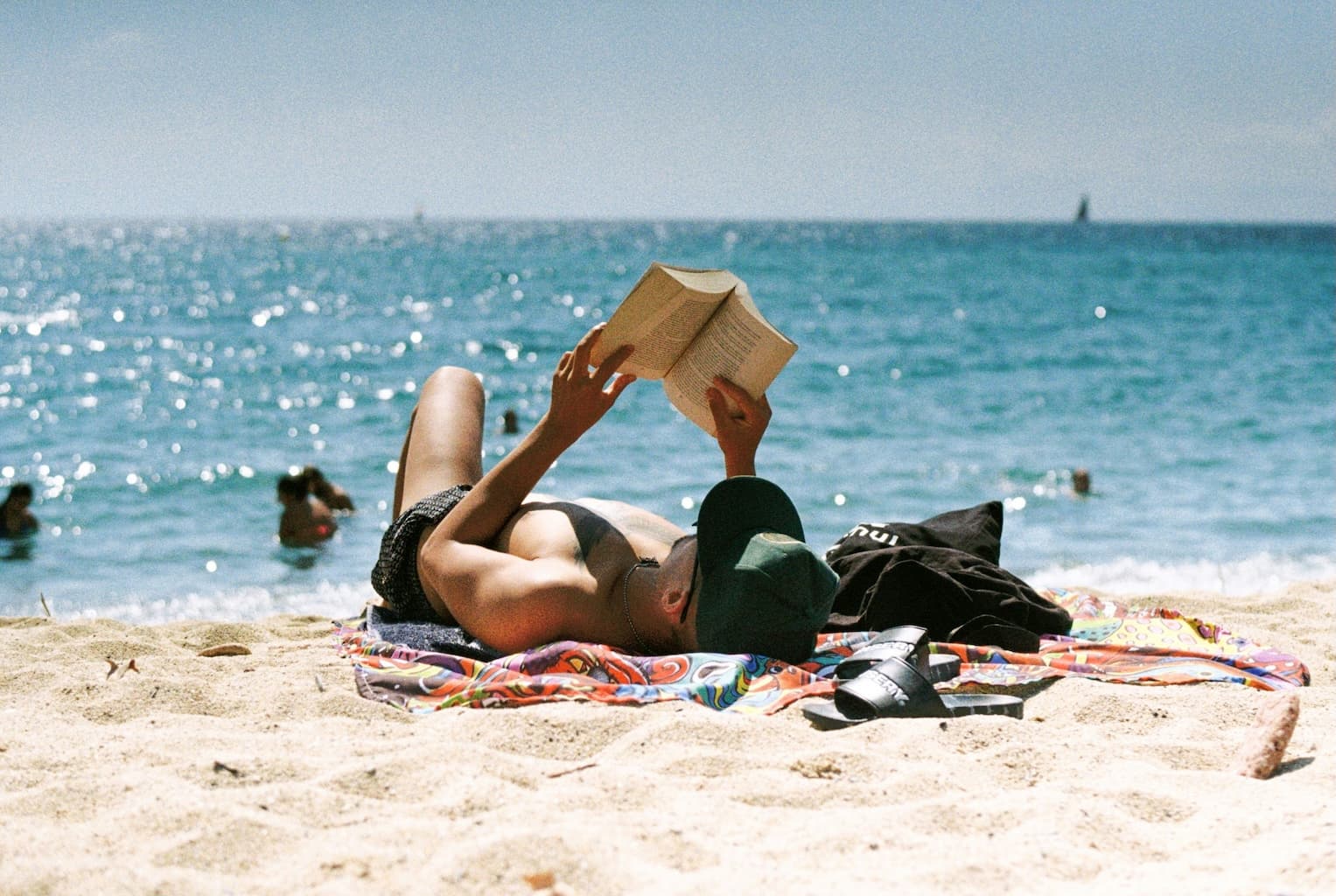
Complete presence. This is the one that separates reading from most of the trending analog hobbies. You can knit while listening to a podcast. You can do film photography on a walk while your mind wanders. Reading doesn't allow that – you either follow the sentence or you don't. People sometimes frame this as a downside ("reading is so demanding"). I think it's the whole point. The full attention is the experience.
No product to show off. Pottery has Instagram. Vinyl has the cover photo. Even cross stitch ends up on Etsy. Reading has nothing to perform. There's a private dimension to it that no amount of Bookstagram covers up. You read because you want to be in the book, not because you'll have something to post afterwards. That's rare in 2026.
A built-in reward cycle. Books end. That sounds obvious, but think about scrolling – there's no ending. Reading hands you a finish line every time. After I finished Tiny Experiments by Anne-Laure Le Cunff, I sat with the book for a few minutes before I did anything else, and I left the morning with a list of small experiments I actually wanted to run – this blog turned out to be one of them. Zoom out and the finished stack does something even better. When I look at the books I've gotten through this year, the satisfaction isn't about the count. It's the sense of what those books did to me. That accumulation is something the feed can't give you.
Tiny Experiments
by Anne-Laure Le Cunff
This book rewired how I approach anything new. Instead of deciding to become something (which is intimidating and abstract), you run a tiny experiment. Try it small, honestly, and see.
Est. read: 5h 19 min
Get your reading estimatePlan your analog reading year
Use the free Reading Goal Planner to set a realistic goal and see how many books your screen-free time can add up to.
Plan your reading goalBut I Read on an iPad, Does That Count?
Yes, I read on an iPad Mini, in Apple Books. And I've made peace with the fact that calling reading on a backlit device "analog" feels like a stretch the first time you say it out loud. Here's how I think about it. Analog isn't really about the medium – it's about the experience. Reading with notifications off, in a single app, on a single linear task, with no algorithm trying to redirect you, is functionally analog in every way that matters. The relevant distinction isn't paper vs. screen. It's active (reading) vs. passive (scrolling).
That said: physical books have real advantages for the analog experience. No bright light in your eyes. No way to slip into another app. A subtle but real shift in how your brain registers the activity. If you can read on paper, do it. If you read digitally like I do, the trick is to make your device behave like a book. Do not disturb on. All other apps closed. Reading mode with a warmer display. And the phone in another room – because it's not the screen that ruins reading, it's the second screen. More on this in your reading setup matters more than willpower – the short version is that a few small configurations turn a multipurpose device into a single-purpose one for the duration of your session.
How to Build Reading Into Your Analog Routine
Reading is already in your day. Probably not as much as you'd like, but it's there. The work is to claim it as your analog practice, on purpose, with structure, instead of treating it as something you'll get around to. Five tactics that have actually worked for me:
- Designate analog windows. Pick a part of your day where your phone is out of reach and reading is the default. Morning before checking anything is the easiest one to defend. Evening after screens off is the next best. Reclaim the bookends – the middle of the day is harder.
- Build a reading ritual. Specific spot, specific drink, specific lighting. Mine: bed, natural light, no alarm, iPad on the nightstand from the night before. Every detail is one less decision your brain has to make to start.
- Tell people you're reading. "I'm reading" is a complete sentence. It's also a soft social boundary that almost everyone respects, especially in 2026. You don't have to defend it any further.
- Track it. Watching your reading time stack up week over week makes the practice visible. That's part of why I built ReadingHabit – you log the session, the streak builds, your analog hours accumulate, and on the days you can't tell whether the practice is "working," the data gives you the answer.
- Pair with another analog activity. Reading + journaling, reading + a walk to think about what you read, reading + slow coffee – pairings reinforce each other and turn a single practice into a longer block of unplugged time.
I wrote a detailed guide on how to build a reading habit that sticks in case you're interested.
See your reading history at a glance
ShelfCheck shows you every book you've finished and the time you've invested. Your analog practice, made visible.
Check your reading historyReading Was Always Analog
You don't need a film camera, a pottery wheel, or a kit of any kind to opt into the analog moment. You need a book. Maybe one you already own. Maybe one your library can hand you for free. The trend is new. The practice is timeless. Reading was the original analog hobby – undemanding of equipment, requiring nothing of you but your attention – and it has been waiting on the nightstand the whole time.
If you've been reading every day for years, you were already part of this. If you haven't, the entry cost is the lowest of any analog hobby on the trend list. Open the book. That's it. I wrote a whole guide on building a reading habit that sticks if you want a fuller system – but you don't need to read that first. You can just start tonight.
Make reading your daily analog ritual
ReadingHabit tracks your screen-free reading time, builds your streak, and proves your analog practice is working. Join the waitlist for early access.