The Research Behind Reading Speed
Where the 238 words-per-minute figure comes from: Brysbaert's 2019 meta-analysis, what it pooled, what it left out, and why speed-reading claims fail.
 Lucas Bewersdorff
Related reading
My Reading Recap for September 2026
What I read in September 2026, which book was a hit and which one I should have quit, plus the streak, hours, pages, and sessions behind the whole month.
Reading Speed vs Comprehension
Does reading faster hurt comprehension? What the research says about the trade-off and where it starts to cost you. Extra: a one-minute check for your own reading.
Spooky Season Reading Challenge: 31 October Prompts
A 31-day October reading challenge with a prompt for every day, no scary books needed. Starting October 1st.
The Paper Behind 238 Words Per Minute
The figure that circulates as "the average adult reads 238 words per minute" comes from Brysbaert's 2019 review and meta-analysis of reading rate, published in the Journal of Memory and Language. Marc Brysbaert, an experimental psychologist at Ghent University, pooled 190 studies with 18,573 participants. His headline says: 238 words per minute (WPM) for silent reading of English nonfiction, 260 WPM for fiction, and 183 WPM for reading aloud.
Each number describes one kind of reader: adult native speakers up to age 60 without reading problems, reading normal text for comprehension and staying on task. For the same figures converted into pages and hours, see What Is the Average Reading Speed.
Measure yourself
The free Reading Speed Test times a silent read of fiction, nonfiction, or academic text, then checks your comprehension – a ballpark WPM and PPM in a few minutes.
Take the free speed testWhat Brysbaert 2019 Pooled
A meta-analysis runs no new experiment; it combines results that earlier studies already published. Brysbaert kept 190 studies from 169 articles, published between 1901 and 2019. To qualify, a study had to test at least 10 healthy adults aged 17 to 60, all native speakers, reading normal text silently (for comprehension or for fun) with the full text in view. Those rules excluded proofreading tasks, lists of unconnected words, and displays that show one word at a time.
Averaged across all 190 studies, the rate came out at 238 WPM, with a 95% confidence interval of 230–246 and a median of 235. Weighting the studies by sample size (or by precision) gave 242–247 WPM, and the 144 English-language studies alone averaged 236. The studies disagreed widely, which is why they were pooled: no single sample, text, or lab decides the result.
Before 2019, the default cited figure was 300 WPM. Brysbaert traces it to early studies with easy material or selective samples: Huey's 1901 students reading an interesting novel (300–350 WPM), Tinker's tests built from grade-6-level paragraphs (about 309 WPM), and a much-reprinted table of 10 skilled readers averaging 308 WPM, which he matches to 10 MIT undergraduates from a 1975 study. Textbook-based tests like the Nelson-Denny Reading Test had put students near 250 all along. His verdict on 300 as a target: "unrealistic for the majority of people."
Reading Rates by Condition
The headline number is one row of many:
| Reading condition | Average | Most adults | Source in the paper |
|---|---|---|---|
| Silent reading, nonfiction | 238 WPM | 175–300 WPM | Meta-analysis of 190 studies |
| Silent reading, fiction | 260 WPM | 200–320 WPM | 48 regular readers timing a novel |
| Reading aloud | 183 WPM | – | Meta-analysis of 77 studies |
| Reading to memorize | ~100 WPM | – | Review of studies that tested recall |
The rows are different tasks, not different grades of reader. Brysbaert explains the gap between fiction and nonfiction with word length: English fiction averages 4.2 letters per word, nonfiction 4.6. That gives a quick estimate for any English text: expected WPM = 238 × 4.6 ÷ the text's average word length. Run on his own paper (5.1 letters per word), it predicts 215 WPM. Reading aloud runs at speaking speed, and memorizing is slow because readers go back and reread to connect the parts.
For these rates in pages per hour, see How Many Pages Can You Read in an Hour.
Where the 238 Figure Stops Applying
The paper flags each of these limits itself. In most of them, the number drops.
- Children and older adults. Reading speed grows through school: a large 1965 study measured 80 WPM in first grade, 250 WPM in grade 12, and 280 WPM in college. It declines again in old age, that's why the meta-analysis stops at 60.
- Second-language readers. In one study the paper reports, reasonably proficient Dutch–English bilinguals read a novel 17% slower in English than in Dutch, and second-language rates below 100 WPM are not uncommon. As a native German speaker, I do read faster in German. I've never measured the gap, but it feels small (and I rarely read German books anymore).
- Readers outside universities. Nearly all 190 studies tested Western, educated samples, mostly undergraduates. One study that tested both groups found 248 WPM for students and 218 WPM for a community sample.
- Everyday reading. Outside a study, minds wander and messages interrupt: in one experiment, students took 34 minutes to read a textbook chapter in the lab and 1 hour 9 minutes at home, with no difference in comprehension.
- Screens. Reading times on screens and on paper are very similar (except on the low-quality screens of the earliest studies), though paper gives slightly better comprehension. I noticed no speed difference when I moved from paper books to an iPad mini.
- One-minute tests. Most of the pooled studies used short tests. Those weren't faster on average, but their results scattered far more than long tests did, so Brysbaert recommends at least 5 minutes of reading one long text for a reliable number.
A pooled average also describes a population, not a person. Brysbaert calls the differences between readers "large and stable", and reports little evidence that those differences lead to better or worse comprehension. If your own number sits below 238, Am I a Slow Reader goes over what it does and doesn't mean.
Why Most Speed-Reading Claims Fail the Evidence
The claims behind speed-reading courses and apps were examined in a 2016 review by Keith Rayner and colleagues in Psychological Science in the Public Interest. The core finding: a trade-off between speed and accuracy. Skilled readers already average 200 to 400 WPM, and spending less time on a text means understanding less of it.
By a rough estimate quoted in Brysbaert's paper, each stop of the eyes (a fixation) lasts 200–250 milliseconds and takes in 7–8 letters clearly, which works out to about 280 WPM. The review adds that eye movements take up no more than 10% of reading time (so the eyes aren't the limit). What actually slows you down is how fast the brain recognizes words and builds them into sentences. Apps that flash one word at a time in a fixed spot also remove the option to look back, which tends to make comprehension worse. In a study Brysbaert cites, readers who spent over 20 minutes on the first chapter of an Orwell novel this way read at about 200 WPM, no faster than on paper, and understood less than readers who had the book.
The review also concludes that rates above 1,000 WPM aren't possible without a severe loss of understanding. Numbers like that come from skipping text, which is skimming. Skimming is a real skill (with a known cost) – fine for getting the gist or deciding whether you actually want to read a book, poor for anything you want to remember. The review's advice for reading faster is: practice reading, and build your vocabulary. I tried the popular techniques myself (finger-pacing, chunking, peripheral-vision tricks), and How to Read More Without Speed Reading covers why none of them stuck.
How to Cite the 238 Figure
The reference, in APA format:
Brysbaert, M. (2019). How many words do we read per minute? A review and meta-analysis of reading rate. Journal of Memory and Language, 109, 104047. https://doi.org/10.1016/j.jml.2019.104047
Three rules keep the quote accurate:
- Attach the condition. "About 238 words per minute" is not the full picture. "About 238 words per minute for adults reading English nonfiction silently" is the paper's claim.
- Treat it as an average, not a norm. Most adults read nonfiction at 175–300 WPM, and the average doesn't say whether one reader's number is good. For that question, see What Is a Good Reading Speed.
- State your words-per-page assumption. Converting WPM into pages takes one (ReadingHabit uses 250 words per page), and it deserves mentioning next to the result. For the units themselves, see PPM vs WPM Explained.
What the Research Can't Tell You
A pooled average is a good default when nothing is known about a reader. That's why every reading-time estimate in ReadingHabit's tools starts from 238 WPM until you give it your own number. But none of the 190 studies measured you, on your books, at the time you usually read.
My first online speed test used a dense academic passage and put me below 0.5 pages per minute (I told that story in How Fast Do You Read). The free Reading Speed Test gives me a ballpark of 0.7 in a few minutes. A few hundred sessions logged in ReadingHabit settled on the same 0.7 pages per minute (about 175 WPM) (my stable number). That's below 238, and it fits two of the limits above: a second language, and reading outside a lab.
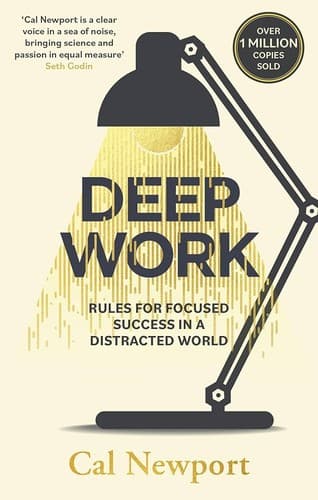
Logged sessions are how Brysbaert measured fiction reading, too: his readers noted when they started and stopped reading a whole book. And they show what no single test can, like how much a dense book slows you down: Deep Work took me 0.4 pages per minute, compared to my usual 0.7.
The research has an average. You have a number.
ReadingHabit measures your reading rate from every session you log – a stable number from your own reading, with insights no pooled average can give. Join the waitlist for early access.