What Do I Read After? A Recommendation Framework
"What should I read next?" is the wrong question. "What should I read next, given what just landed?" is the right one. A framework with three examples.
 Lucas Bewersdorff
Related reading
I Read Every Morning for 30 Days
I read every morning for 30 days and logged almost every session. The real numbers, the mornings my log missed, what changed, what didn't, and whether it stuck.
Reading Isn't Natural. That's the Point.
Humans evolved to speak, not to read. Reading is a skill your brain builds from borrowed parts – which is why practice changes it, even in adults.
How Many Books Should You Read in a Year?
There's no correct number of books to read in a year. Here's what most people read, why a borrowed goal fails, and how to build one from your own day.
"What Should I Read Next?" Is the Wrong Question
"What should I read next?" is one of those questions that sounds answerable and isn't. Strip away the context and there's nothing to grab onto – next after what? Toward what? The question that actually has an answer is longer: what should I read next, given what just landed for me? I learned this without meaning to, on a run of three business books that lined up so well it felt like someone had placed them in order for me. I read Never Lose a Customer Again, and the idea that stuck was that the experience you give people is the real moat, not the product. So I picked up Unreasonable Hospitality next, because I wanted more of exactly that (and it delivered). By the time I closed it I knew precisely what I was hungry for, and $100M Offers was the obvious answer. Three different authors, one thread. Each finish told me what to read next, because I'd noticed what each book had actually done to me.
Every time it didn't work, I'd close a genuinely great book and feel nothing pointing anywhere. So I'd default to the list – the Apple Books queue, the Audible library, the Amazon wishlist, the screenshots buried in my Notes app – and pick whatever had the most hype or the nicest cover. That book almost never landed, because it had nothing to do with the one I'd just loved. The list had subtly become a substitute for choosing. What I was missing was the thirty seconds of asking what about the last book had landed. Because every book you finish is a recommendation engine for the next one – but only if you know what to ask of it.
The Framework: Three Follow-Up Types
Here's the whole method. When you finish a book that mattered, there are three kinds of follow-up you can pull from it, and which one is right depends entirely on what made the book land. So before you go looking, you diagnose – not the book, but your own reaction to it.
Type 1: the theme-bridge. A different book, by a different author, chasing the same theme. The "I want more of this idea". Those three business books were a theme-bridge chain – different writers, one shared obsession with how you treat people. The theme-bridge is the move when it was the argument that grabbed you, not the person making it; you're following the idea out of one book and into the next mind that took it seriously.
Type 2: the author-adjacent. The author's other work, or a writer so close they may as well be. This is for "I want more of this voice". Years ago I went straight from Blink to The Tipping Point on nothing but the pleasure of how Malcolm Gladwell thinks, and it worked beautifully. One honest warning I learned the hard way: author-adjacent works sequentially, with space between the books. Read two by the same author at the same time and they blur into one undifferentiated paste. I did exactly that with some other books by Gladwell once and still can't tell you which idea came from which book (I wrote about that mistake in reading multiple books at once). More of a voice, yes – just not all at once.
Type 3: the contrarian counter. A book that argues the opposite, or comes at the question from a different intellectual tradition entirely. This is for "I'm not sure I bought it – give me the other side". I'll be honest: this is the one I reach for least. When a book resonates, my instinct is to go find more of what already agreed with me, which is exactly the instinct the contrarian counter exists to interrupt. The few times the counter-case found me anyway – Nir Eyal writing Indistractable partly to complicate his own earlier Hooked is one – it sharpened what I thought far more than another book nodding along ever did. It's the most valuable type and the least comfortable, which is probably not a coincidence.
So the diagnostic is one question, asked the moment you close the book: what actually landed? If it was the idea, build a theme-bridge. If it was the voice, go author-adjacent. If it was a claim you're still side-eyeing, read the counter. Get that answer right and "what should I read next" becomes a decision. The three examples below are just the framework run on books almost everyone has read.
Example in Action: After Atomic Habits
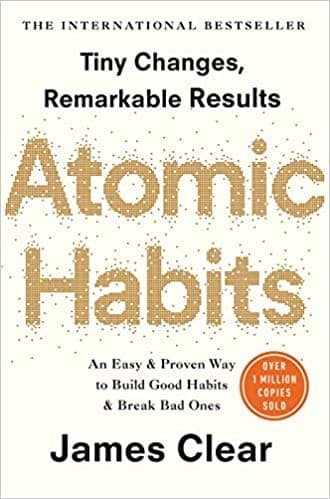
Atomic Habits is the book almost everyone starts with when they get curious about habits. It's sold something absurd like fifteen million copies. Full disclosure: I came at this topic sideways and read its neighbors before I ever got to the anchor itself, so I'm using it here because it's the most common starting point, not because it's my favorite. What lands for most readers is the core idea: identity-based habits and tiny 1% improvements compound. Here's the framework run on it.
Theme-bridge: same idea, deeper foundation. If it was the make-it-small insight that landed, Tiny Habits by BJ Fogg is where a lot of it came from in the first place.
Tiny Habits
by BJ Fogg
The Stanford behavior scientist's research-grade version of the small-habits argument. A lot of the popular advice traces back to his work.
Est. read: 5h 36 min
Get your reading estimateTiny Habits is the more rigorous, research-first telling of the same theme (Fogg is the source of the "make it embarrassingly small" rule I lean on constantly). Same idea you liked, with a deeper foundation underneath.
The author-adjacent slot (and why it's empty). Here's where the framework earns its keep by coming up with nothing. James Clear has essentially written one book; there's no second title to graduate to, just a newsletter. That's not a failure of the method, it's information. An empty author-adjacent slot tells you the voice you liked is a one-off, and you're better served by bridging to the nearest cousin. For most readers that cousin is Charles Duhigg:
The Power of Habit
by Charles Duhigg
The narrative-nonfiction predecessor that framed habits as cue, routine, reward. More reporting and story, less self-improvement checklist.
Est. read: 7h
Get your reading estimateThe Power of Habit came first and frames habits through the cue-routine-reward loop, leaning on reporting and story rather than a checklist. Different author, same theme, a noticeably different texture – which is exactly what you want from a bridge.
Contrarian counter: a different diagnosis entirely. Atomic Habits says the fix is better systems for building good behaviors. This one reframes the whole problem:
Indistractable
by Nir Eyal
Argues the real lever isn't building good habits but managing distraction – a different diagnosis of why you don't do the things you mean to.
Est. read: 5h 5 min
Get your reading estimateMaybe you don't have a habit-building deficit, Indistractable suggests. Maybe you have a distraction-management one, and those need different tools. (Nir Eyal is also the cleanest example of an author counter-arguing himself: Indistractable complicates the very hooks his earlier Hooked taught companies to build.) If you finished Atomic Habits nodding along but still not doing the thing, this is the counter worth reading.
Example in Action: After Sapiens
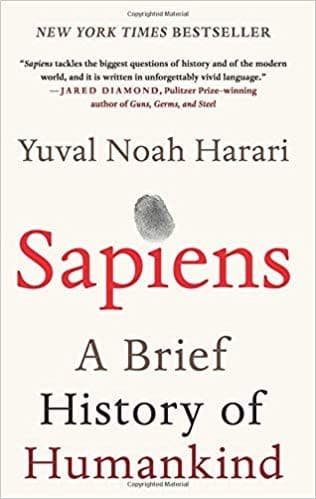
Sapiens is the big-history book everyone's read or been meaning to read. It's Harari's sweep from the cognitive revolution to the present. I'll be straight: this is the example I'm running purely as a demonstration (it's been on my own list for ages), but it's almost too perfect for the framework, because all three follow-up types exist and the counter-case is unusually simple.
Theme-bridge: same scope, different engine.
Guns, Germs, and Steel
by Jared Diamond
The other foundational big-history book. This one argues geography and biology, not culture, dealt the cards that decided which societies came to dominate.
Est. read: 9h 15 min
Get your reading estimateIf the thrill of Sapiens was the zoomed-all-the-way-out view of human history, Jared Diamond gives you the same altitude with a different explanation for how we got here – geography and biology rather than Harari's stories and shared fictions. Same theme, rival mechanism.
Author-adjacent: same voice, pointed forward.
21 Lessons for the 21st Century
by Yuval Noah Harari
Harari turns the same voice from the deep past to the immediate future – same lens, aimed forward instead of back.
Est. read: 6h 43 min
Get your reading estimateIf it was Harari himself you liked – the cadence, the provocations – he's written the obvious next steps. 21 Lessons aims the same mind at the present and near future (and Homo Deus at the far one). When the voice is the draw, the author-adjacent slot is full and easy.
Contrarian counter: the rebuttal, almost by name.
The Dawn of Everything
by David Graeber and David Wengrow
A direct rebuttal. The authors argue there was no inevitable march from foraging bands to hierarchy, and that Sapiens seems to flatten a much stranger, freer human story.
Est. read: 12h 19 min
Get your reading estimateThis is the cleanest counter I know of. The Dawn of Everything takes direct aim at the tidy narrative Sapiens tells and argues human history was far less linear and inevitable than Harari makes it sound. You don't have to come down on either side, but reading them back to back is how you stop mistaking one compelling story for settled truth.
Example in Action: After The Psychology of Money
The Psychology of Money is the mainstream behavioral-finance book, and it's probably the one that's stuck with me deepest. Housel's argument that reasonable beats rational, that the financial choices you can actually live with outperform the optimal ones you can't, is a framework I still use. When it landed for me, all three follow-ups were sitting right there.
Theme-bridge: same wavelength, different author.
The Almanack of Naval Ravikant
by Eric Jorgenson
Same wealth-as-mental-models register, built as short modular passages you can dip into – different author, very similar wavelength.
Est. read: 4h 14 min
Get your reading estimateIf what landed was money-as-behavior-and-heuristics rather than money-as-spreadsheets, The Almanack is the natural bridge. Eric Jorgenson assembles Naval into the same register Morgan Housel writes in – mental models over math – and it's modular enough that it's become one of my permanent dip-in books rather than a one-and-done read.
Author-adjacent: more of the voice.
Same as Ever
by Morgan Housel
Housel's follow-up: same calm, story-driven voice, widened from money to the human behaviors that never change.
Est. read: 4h 29 min
Get your reading estimateIf it was Housel you fell for – the calm, the short chapters, the stories – he's made this one easy. Same as Ever is the same voice widened from money to the patterns of human behavior that don't change, and I liked it nearly as much as his first one. (He's since written The Art of Spending Money, too, if you want the most recent one – I've read that as well; the man is reliable.) This is the rare example where the author-adjacent slot is the strongest of the three.
Contrarian counter – the hard original.
Thinking, Fast and Slow
by Daniel Kahneman
The dense, foundational behavioral-economics text that books like Housel's translate and simplify. It's the original, in its harder and more rigorous form.
Est. read: 8h 58 min
Get your reading estimateThis one's less "opposite argument" and more "the rigorous source the popular version smooths over". A lot of what makes Housel so readable is that he's distilling decades of behavioral-economics research into stories; Kahneman is where a good chunk of that research actually lives, in its denser, more demanding form. The contrarian move is to go read the original and let it complicate the tidy version. Full honesty: I haven't made that jump myself yet – it's the most intimidating book on this whole list – but I know it's the right counterweight, and I'd rather tell you that than pretend.
Where to Find the Candidates
The framework tells you how to extend from a book you've read. It doesn't tell you where the candidates come from in the first place, so here's that. For me, the best next books come from two places (neither is an app): the book in my hands (authors name their influences constantly – footnotes, acknowledgements, the offhand "as so-and-so argued") and people whose taste I actually trust (a recommendation from my partner or a friend who knows me beats any algorithm I've used). Everything below is real and useful – but those two places are where my hit rate is highest.
- Goodreads has the biggest dataset by far, which is also its problem: the recommendations skew toward whatever's already popular, so it's great for finding the obvious follow-up and poor at surprising you.
- StoryGraph has a smaller user base but a smarter "books like X" engine. If you want a genuine similarity match rather than a bestseller list, it's the better tool.
- BookTok moves fast and has real energy, but the taste runs narrow. Fantastic inside a specific lane, less so once you step outside it.
- Newsletters from readers you respect are, in my experience, the best signal-to-noise there is. A good curator beats a crowd every time.
- Librarians and bookstore staff are criminally underrated: free, human, taste-driven, and weirdly good at the "I loved this, what next?" question precisely because there's no algorithm in the loop.
Pick whichever fits how you like to discover. The framework is what turns any of these from a pile of titles into the right title. If your problem is choosing from a pool you already own, how to choose your next book is the companion piece to this one.
Stack your next 5 books deliberately
The TBR Stack Planner lets you queue books in order – so the right follow-up is already loaded when you close the current one.
Open the TBR PlannerA Note on Re-Reading
There's a fourth follow-up the framework leaves out, and it's the one I use more than I'd have admitted a few years ago: sometimes the right next book is the one you just put down. I re-read whenever I feel the pull back toward a book (the sense that it still has something for me). Some I've gone all the way through more than once (The Psychology of Money, Never Enough, Hooked, The Minimalist Entrepreneur); others I never really "finish" at all, because they're built to be re-opened – The Almanack of Naval Ravikant, Show Your Work!, and Excellent Advice for Living live permanently within reach for exactly that. Re-reading isn't a failure to move on. A great book gives you different things at different points in your life, and noticing the pull is its own kind of recommendation. Check out why re-reading books is underrated, and if you want the list of some recommended re-reads, here are the books readers re-read every few years.
The Framework Travels With You
The point of all this is the method I went over in the beginning. It follows you to the next book, and the one after that. Finish something that mattered, ask what actually landed (the idea, the voice, or the claim you're not sure about), and let the answer pick the type. Do that and "what should I read next" stops being the anxious, list-scrolling question it used to be for me and becomes a small, satisfying decision you make right at the back cover. (If you want the feeling rather than the mechanics, the one book that changed how I see the world is this same idea told as a story.)
The one piece the method can't solve on its own is memory. The perfect follow-up is useless if you've forgotten it by the time you turn the last page. That's the whole reason I keep a deliberate queue instead of a sprawling wishlist: when I close a book, the next one is already chosen and waiting, so the finish leads somewhere instead of dissolving back into the list. That's exactly what ReadingHabit's TBR Stack Planner is for: a queue you build on purpose, so every ending already has a beginning lined up behind it.
Build a reading queue that compounds
ReadingHabit's TBR Stack Planner lets you queue books deliberately – so each finish leads to the right next one. Join the waitlist for early access.