The Best Books for Building Better Habits
The books that actually changed how I build habits – from Atomic Habits to Tiny Habits. Six reads to make good behavior stick (and bad ones easier to drop).
 Lucas Bewersdorff
Related reading
The Gothic Classics Starter Pack
Eight gothic classics in reading order, easiest first, with word counts, reading times at two paces, and notes for which you can download for free.
Horror Books for People Who Hate Horror
Eight books that run on dread instead of gore, with notes on each about violence, animal harm, body horror, and cruelty, so nothing ambushes you.
My Reading Recap for September 2026
What I read in September 2026, which book was a hit and which one I should have quit, plus the streak, hours, pages, and sessions behind the whole month.
The Books That Rewired How I Build Habits
For years, my reading "habit" was a list. A to-read list that kept growing while I read almost nothing off it. When I eventually read Tiny Habits, one small idea of BJ Fogg's did what none of my ambitious reading resolutions ever had. Instead of "read more", my goal became one page. One page before sleep, on the iPad mini I keep on the nightstand. One page is impossible to fail at, so I didn't (and one page has a way of becoming ten). That single reframe is why I read every night and every morning now, and it's the reason ReadingHabit exists.
I'm aware of the irony of a list like this. These are some of the books that actually changed how I build habits – but a book about habits only pays off if you read it, and reading it takes the exact habit the book is trying to teach you. So maybe treat this as both a reading list and a small dare: pick one, build the tiny reading habit to get through it, and let the ideas do their work. Here's what made the cut, and why.
What Makes a Habit Book Worth Reading
Most "best habit books" lists are just whatever's stacked on the airport front table. I used to roll my eyes at this entire genre, labeling it as "repackaged common sense for people who like feeling productive". What changed my mind was realizing the value was never in the reading. It's in applying one idea. So everything below had to clear three filters: actionable (you can do something with it on Monday morning, not just nod along), evidence-based (there's research or hard-won practice under it), and re-readable (it holds up on a second pass). If you want the broader, mixed-topic version of this, check out the summer self-improvement list.
The 6 Best Books for Building Better Habits
I've ordered these from the one that started my own habit journey to the one I'd actually hand a beginner today:
1. Tiny Habits. The smallest ask on the list (and where mine started).
Tiny Habits
by BJ Fogg
Fogg's behavioral-science case that the way to build a habit is to make it super small and bolt it onto something you already do. The research a lot of the famous habit books point back to.
Est. read: 5h 36 min
Get your reading estimateBehavior happens when motivation, ability, and a prompt line up in the same moment (Fogg calls it B=MAP), and since motivation is the flaky one, you win by making the behavior so easy it barely needs any. Shrink the ask until it's too small to skip, anchor it to something you already do, celebrate it, and let it grow on its own. It's the most actionable book here and the gentlest. If you've failed every ambitious resolution you've ever set, start here just to feel what a habit that actually sticks is like.
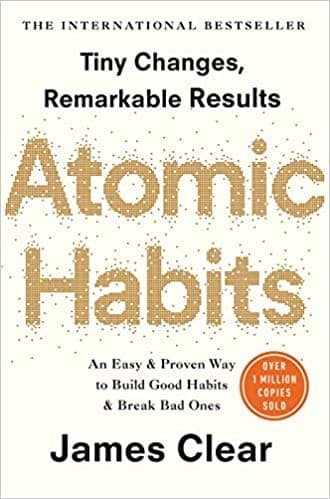
2. Atomic Habits. The one you probably came here for (and the one I skipped).
Atomic Habits
by James Clear
Identity-based habits and 1% improvements that compound. The one almost everyone starts with.
Est. read: 5h 36 min
Get your reading estimateFull disclosure: I came at habits sideways and read this one's neighbors (Tiny Habits and The Power of Habit), so it's here because it's the most common starting point, not because it's my favorite. I've absorbed its ideas secondhand: identity-based habits (you're not trying to run, you're becoming a runner) and 1% improvements that compound. If you want the single framework the whole internet quotes, it's this one – fifteen-million-odd copies can't be entirely wrong.
3. The Power of Habit. The why underneath the loop.
The Power of Habit
by Charles Duhigg
Duhigg's tour of the cue–routine–reward loop, and why some 'keystone' habits pull a dozen others along with them.
Est. read: 7h
Get your reading estimateThis one I've leaned on the most. Duhigg's core model – cue → routine → reward – is the thing I wrote my thesis around, and it isn't abstract for me: my reading habit is that loop. The iPad mini on my nightstand is the cue, bedtime is the routine, and a few calm pages before sleep is the reward. The other idea that stuck is keystone habits – the single habit that drags a bunch of others up with it. You can't really get rid of a habit; you can only keep the cue and swap the routine. Read this if you want the science and the story under the how-to.
See how long your habit-book stack will take
Drop any of these six into the free Reading Time Calculator for a realistic finish date – then actually close them out.
Calculate read time4. The Compound Effect. The long game (and the top of my own TBR).
The Compound Effect
by Darren Hardy
Small, boring, consistent actions compound into outsized results. The maths of doing the tiny thing every single day.
Est. read: 3h 5 min
Get your reading estimateI haven't read this one yet either. It's been sitting on my TBR, and it made it on this list here based on trust. Its whole premise is this article's premise – small, boring, consistent actions compounding into something big. That's literally the maths of a reading habit: ten pages a night is nothing on any given day and fifteen books by December. Writing this article is what finally pushed The Compound Effect to the top of the stack.
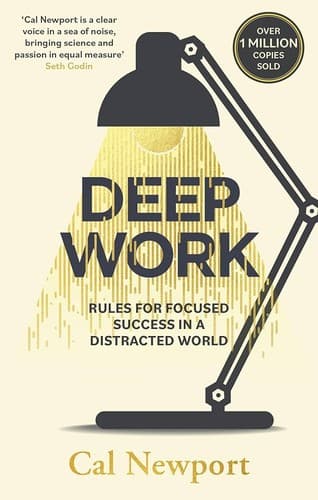
5. Deep Work. Focus as the keystone habit.
Deep Work
by Cal Newport
Newport's argument is that distraction-free focus is a trainable skill you schedule and not a mood you wait around for.
Est. read: 5h 10 min
Get your reading estimateDeep Work is the slowest book I've ever tracked reading (0.4 pages per minute across fifteen sessions, against my usual ~0.67) and it's also the one I remember best, which felt like the book proving its own point in real time. One of its ideas I still actually use is embracing boredom: treating focus as something you train by not reaching for your phone in every dead moment, rather than a state you wait to strike. It reframes attention as a keystone habit, which is also why reading and focus turn out to be the same project. (If that thread interests you, I wrote about reading as the best attention-span training.)
6. Tiny Experiments. The reframe that fixes the mindset.
Tiny Experiments
by Anne-Laure Le Cunff
The reframe of self-improvement as small experiments to run rather than outcomes to force. Curiosity as a better engine than willpower.
Est. read: 5h 19 min
Get your reading estimateMy most recent favorite, and the one I'd hand someone first – more on that below. Le Cunff's reframe is small and enormous at the same time: instead of trying to become something (a reader, a writer, a person who exercises), which is a pressure that mostly makes you freeze, you run a tiny experiment. Do the thing for two weeks and see what the data says, no identity on the line. It took the weight off a bunch of things I'd been stalled on (this blog is one of my tiny experiments). Curiosity turns out to be a much better engine than willpower.
Turn 'I'll read all six' into a plan
The free Reading Goal Planner converts a stack like this into a realistic monthly target – so 'someday' becomes an actual finish date.
Plan your reading goalWhere to Start (If You Only Read One)
If you only read one, read Tiny Experiments. I know the expected answer is Atomic Habits, but my choice is different on purpose: every other book on this list hands you a system, and a system only helps if you actually start it. Tiny Experiments fixes the pressure of trying to become someone (that stops you from starting in the first place). Read it first and the rest will land better.
All six of these books agree on one thing: it comes down to consistency. Not the perfect system, not the biggest goal, just doing the small thing on the days you don't feel like it. That's the same muscle a reading habit is built from, which is the whole reason I keep circling back to it. If you want the reading-specific version of everything above, I put it in how to build a reading habit.
Read About Habits, Then Build One
The highest-leverage habit on this entire list isn't in any of the six books – it's reading itself. The one habit that lets you get through these and everything after them. A stack of unread habit books changes exactly nothing (I used to own the digital version of that stack: a to-read list that just kept growing).
The least ambitious, most useful thing you can do tonight is picking up one book (I'd say Tiny Experiments, but honestly any of them) and read ten minutes, or a single page. Then do it again tomorrow. A visible streak is what turns "I should read these" into a run you don't want to break (here's why streaks work), and it's one of the reasons ReadingHabit exists. Start the smallest possible step towards a habit tonight. That's the move that compounds.
Read about habits, then build one
The most useful habit to build is reading itself. ReadingHabit tracks your sessions and streak so it sticks. Join the waitlist for early access.